
Blog
Carpet Trim Profiles: Seamless Transitions Explained

Feb
Finding the right floor transition is often where the smallest details have the biggest impact. For professional interior designers and contractors, carpet trim profiles are more than finishing touches—they create durable, seamless links between carpet, tile, wood, and stone. With the proper trim, you protect floor edges, reduce trip risks, and bring visual unity to every space. This guide covers the key profile types, their functional value, and how thoughtful selection ensures both beauty and performance in every project.
Table of Contents
- What Carpet Trim Profiles Are And Their Role
- Popular Carpet Trim Profile Types In The UK
- How Carpet Trims Enhance Safety And Design
- Professional Application And Fitting Practices
- Choosing The Right Trim For Your Project
- Mistakes To Avoid With Carpet Trims
Key Takeaways
| Point | Details |
|---|---|
| Understanding Carpet Trim Profiles | Carpet trim profiles are essential for managing transitions between different flooring materials, enhancing both safety and aesthetics. |
| Types of Carpet Trim | Common types like Door Bars and Stair Nosings serve specific purposes, providing stability and visual appeal in various environments. |
| Professional Installation Practices | Meticulous measurement and preparation are crucial for achieving effective carpet trim installation to avoid gaps and safety hazards. |
| Avoiding Common Mistakes | Key errors, such as neglecting height differences and poor colour matching, can compromise both functionality and aesthetics in flooring transitions. |
What Carpet Trim Profiles Are and Their Role
Carpet trim profiles are essential architectural components designed to manage flooring transitions between different surface materials. These precision-engineered metal accessories create seamless connections that not only enhance aesthetic appeal but also provide crucial functional benefits for interior spaces.
At their core, carpet trim profiles serve multiple critical purposes:
- Bridge height differences between adjoining floor surfaces
- Protect floor edges from wear and potential damage
- Create clean, professional visual transitions
- Ensure safety by minimising trip hazards
- Accommodate natural floor material expansions and contractions
Transition management is the primary function of these specialised profiles. Carpet floor transition profiles represent sophisticated engineering solutions that connect disparate flooring materials like carpet, tile, stone, or wood with remarkable precision. They are carefully designed to handle subtle level changes while maintaining a smooth, uninterrupted surface appearance.
Professional interior designers and contractors understand that these trims are far more than simple aesthetic accessories. They represent a critical intersection between form and function, ensuring that different flooring materials can coexist harmoniously while maintaining structural integrity and visual elegance.
Pro tip: Always measure floor height differences precisely before selecting a carpet trim profile to guarantee a perfect, professional installation.
Popular Carpet Trim Profile Types in the UK
The United Kingdom offers a sophisticated range of carpet trim profiles that cater to diverse interior design requirements and flooring transitions. Popular carpet trims in British homes and commercial spaces include several specialised metal profiles designed for seamless floor connections.
Key carpet trim profile types prevalent in the UK include:
- Door Bars: Connecting carpet to different flooring materials
- Z-Bars: Providing secure carpet edging and protection
- Stair Nosings: Creating safe and visually appealing stair transitions
- Threshold Trims: Managing height differences between floor surfaces
- Reducer Strips: Smoothing transitions between floors of varying heights
These high-quality carpet trims are typically crafted from solid brass, offering superior durability and aesthetic elegance. Professional interior designers appreciate these profiles for their ability to create clean, professional transitions that enhance both safety and visual appeal across residential and commercial environments.
Each trim profile serves a unique functional purpose, allowing interior designers and contractors to select precise solutions that match specific flooring requirements. The versatility of these trims enables seamless connections between carpet, tiles, vinyl, wood, and stone flooring, ensuring a polished and professional finish.
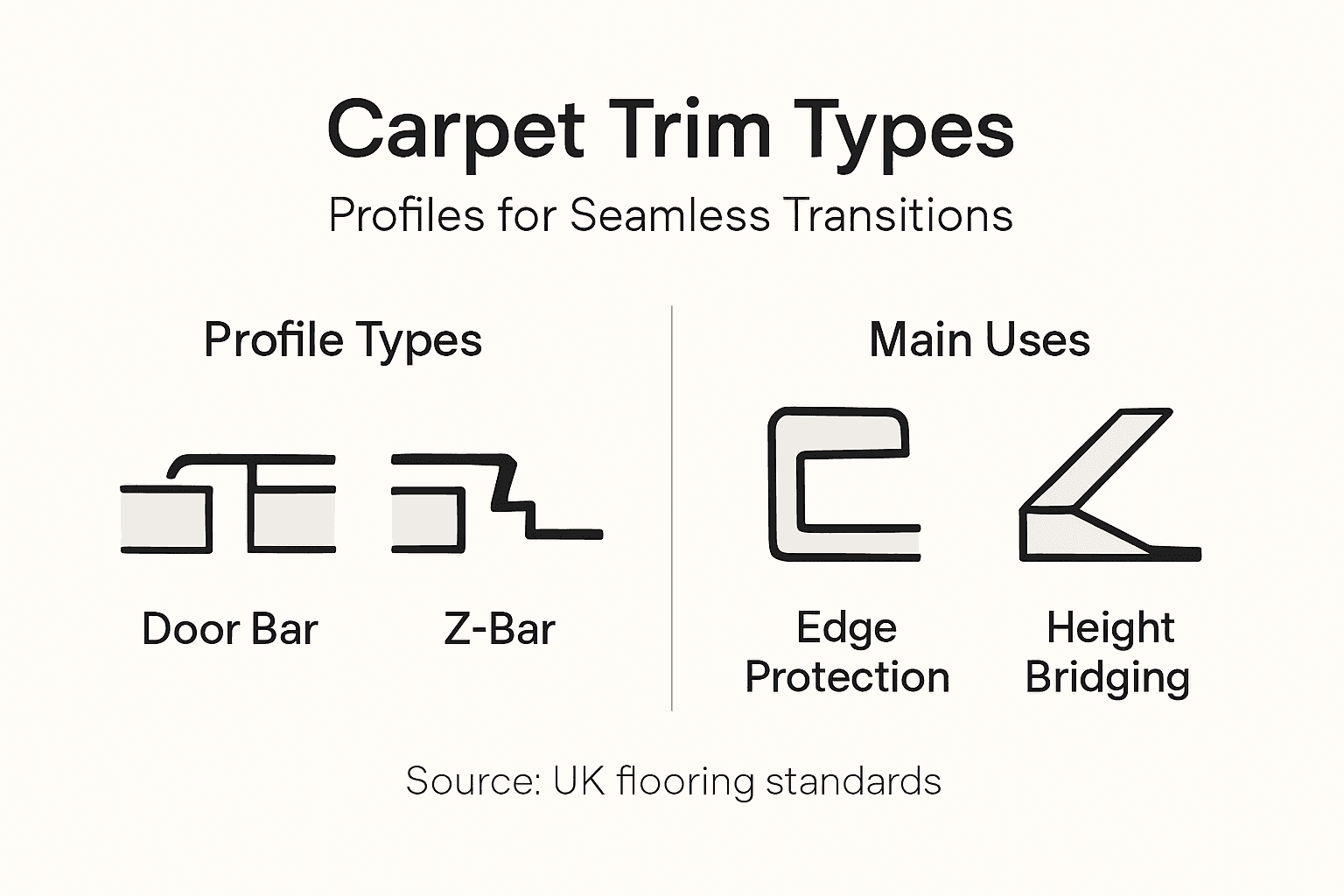
Here is a comparison of common carpet trim profile types and their ideal UK applications:
| Trim Type | Best For | Typical Material |
|---|---|---|
| Door Bar | Joining carpet to wood/tile | Brass or aluminium |
| Z-Bar | Securing carpet edges | Brass |
| Stair Nosing | Stair safety and visual finish | Brass or aluminium |
| Threshold Trim | Levelling height differences | Brass |
| Reducer Strip | Smoothing height transitions | Brass or aluminium |
Pro tip: Select carpet trims that match your existing metal fixtures to create a cohesive and harmonious interior design aesthetic.
How Carpet Trims Enhance Safety and Design
Carpet trims play a crucial role in creating both visually appealing and safe interior environments. Carpet trim options are not merely decorative accessories but essential elements that significantly contribute to floor safety and aesthetic coherence.
Key safety and design benefits of carpet trims include:
- Preventing carpet edge fraying and deterioration
- Reducing trip hazards on stairs and floor transitions
- Creating smooth, professional floor connections
- Providing additional grip on potentially slippery surfaces
- Protecting underlying flooring materials from damage
Professional interior designers understand that carpet trims serve multiple critical functions beyond mere aesthetic enhancement. These precision-engineered metal profiles act as protective barriers, minimising potential accidents while simultaneously elevating the visual sophistication of interior spaces.
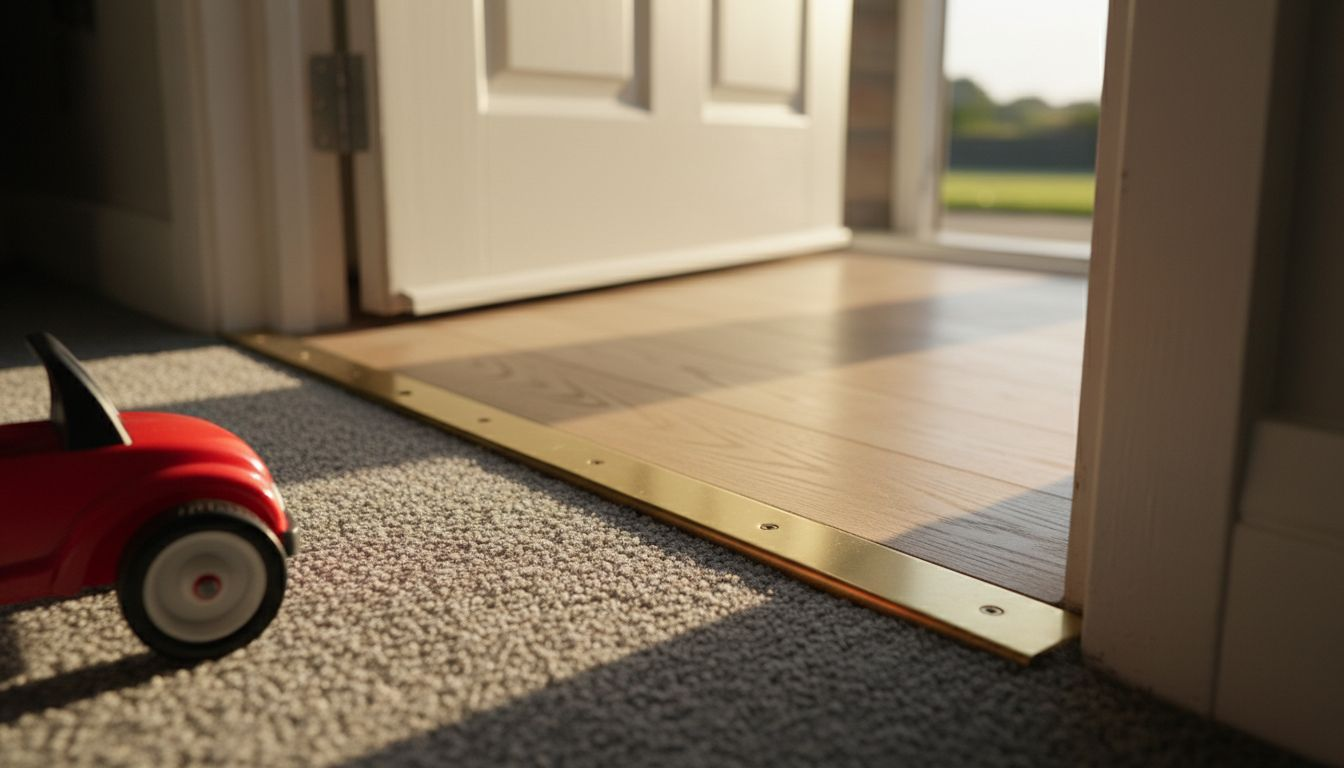
The strategic placement of carpet trims can transform potential safety risks into design opportunities. By carefully selecting trims that complement existing interior elements, professionals can create seamless transitions that not only protect but also enhance the overall visual narrative of a space. The right trim can bridge different flooring materials, conceal potential level differences, and provide a polished, professional finish.
Pro tip: Prioritise brass trims with multiple finish options to ensure long-lasting durability and design flexibility across various interior environments.
Professional Application and Fitting Practices
Professional carpet trim installation requires meticulous attention to detail and precision. Professional installation techniques demand a systematic approach that ensures seamless, durable floor transitions.
Key tools and equipment for professional carpet trim fitting include:
- Fine-toothed hand saws for precise cutting
- Measuring tapes with high accuracy
- Professional-grade metal measuring squares
- Stabilising clamps
- Safety goggles
- Specialised fastening hardware
The installation process involves several critical steps that separate professional work from amateur attempts. Precise measurement is paramount, requiring contractors to assess floor surfaces at multiple points to account for subtle irregularities and ensure a perfect fit.
Successful carpet trim application demands comprehensive preparation. Professionals carefully clean installation areas, select appropriate trim types for specific flooring combinations, and employ advanced securing techniques using nails, screws, or specialist adhesives. The final quality check ensures not just functional performance but also aesthetic excellence, with carpet edges neatly tucked and transitions appearing completely seamless.
Pro tip: Always conduct a thorough surface measurement and level assessment before commencing carpet trim installation to prevent potential alignment issues.
Choosing the Right Trim for Your Project
Selecting the ideal carpet trim requires careful consideration of multiple factors to ensure a professional, seamless finish. Carpet trim selection demands a strategic approach that balances functional performance with aesthetic harmony.
Key considerations for choosing the perfect carpet trim include:
- Material compatibility with existing flooring
- Height differential between adjoining surfaces
- Aesthetic continuity and colour matching
- Installation method complexity
- Long-term durability requirements
- Visual design of surrounding interior
Professional interior designers understand that carpet trim selection is not a one-size-fits-all process. Each flooring interface presents unique challenges, requiring meticulous assessment of surface characteristics, potential movement, and aesthetic integration. Brass trims offer superior durability and versatility, allowing seamless transitions between different floor types while maintaining a refined, sophisticated appearance.
The ultimate goal of carpet trim selection is creating a harmonious, safe, and visually compelling floor transition. By carefully evaluating factors such as pile height, surface texture, and environmental conditions, professionals can ensure a trim solution that not only looks impeccable but also performs exceptionally across residential and commercial spaces.
Pro tip: Always obtain multiple trim samples and test them in your actual installation environment to confirm perfect colour and design compatibility.
Mistakes to Avoid with Carpet Trims
Professional carpet trim installation requires avoiding critical errors that can compromise both aesthetic appeal and functional performance. Carpet trim installation mistakes can significantly impact the overall quality and longevity of flooring transitions.
Common carpet trim mistakes to avoid include:
- Incorrect installation sequencing
- Neglecting height differences between surfaces
- Failing to match trim colour with existing decor
- Improper edge securing techniques
- Overlooking potential future maintenance challenges
- Selecting inappropriate trim profiles
The timing of installation represents a particularly nuanced challenge for professionals. Installing trims before carpet laying risks visible gaps, while installing after carpet placement can potentially damage existing flooring. Each project demands a strategic approach that considers specific environmental and design constraints.
Professional interior designers understand that carpet trim selection is not merely about aesthetic preference but involves comprehensive assessment of functional requirements. Overlooking critical details like surface compatibility, potential movement, and long-term durability can lead to expensive remediation and compromised floor transitions.
The table below outlines key installation mistakes and their potential consequences:
| Mistake | Resulting Problem |
|---|---|
| Wrong installation sequence | Visible gaps or poor fit |
| Neglected surface height | Trip hazard and uneven transition |
| Poor trim colour selection | Disjointed interior appearance |
| Weak edge securing technique | Loose trim, safety risks |
| Ignoring maintenance needs | Reduced durability and appeal |
Pro tip: Conduct a comprehensive site survey and create a detailed installation plan before commencing any carpet trim project to mitigate potential installation errors.
Achieve Perfect Flooring Transitions with Expert Carpet Trim Profiles
Selecting the right carpet trim profile is essential for bridging height differences, enhancing safety, and elevating your interior design as explained in the article. If you are seeking durable, high-quality metal trims that offer seamless joins between carpets and other flooring types in British homes or commercial spaces, quality and precision cannot be compromised. Key challenges like preventing trip hazards, protecting floor edges, and achieving a flawless aesthetic finish require professional-grade products crafted from superior materials such as solid brass.

Discover a comprehensive range of expertly hand-finished door bars, thresholds, and edge trims designed exclusively for these purposes at Quality Carpet Trims. Our commitment to British manufacturing and 10 stunning finishes ensures your project not only meets safety and functional needs but also complements your interior style beautifully. Act now to request free samples, benefit from fast delivery, and receive expert advice tailored to your installation challenges. Visit Quality Carpet Trims today and take the next step towards flawless flooring transitions.
Frequently Asked Questions
What are carpet trim profiles and their purpose?
Carpet trim profiles are architectural components designed to manage transitions between different flooring materials. They enhance aesthetics, protect edges from wear, and ensure safety by minimizing trip hazards.
What are the common types of carpet trim profiles?
Common types include door bars, Z-bars, stair nosings, threshold trims, and reducer strips. Each serves a specific function, such as joining different materials or smoothing height differences.
How do carpet trims enhance safety in a space?
Carpet trims prevent fraying of carpet edges, reduce trip hazards, create smooth floor connections, and protect underlying flooring materials, contributing to both safety and visual appeal.
What should I consider when choosing carpet trim for my project?
Consider material compatibility, height differences between surfaces, aesthetic continuity, installation complexity, and long-term durability requirements to ensure a professional finish.
Recommended
- Carpet To Tile Trim – Quality Carpet Trims
- transition strip, transition strips for uneven floors – Quality Carpet Trims
- carpet to carpet tranistion Archives – Quality Carpet Trims
- Transition Strip – Quality Carpet Trims
- Vloerafwerking bij kozijnen: Problemen voorkomen en passende keuzes | aluminiumschuifpuionline