
Blog
The role of trims in aesthetics: a homeowner’s guide

Jul
TL;DR:
- Trim profiles influence the atmosphere of a room by shaping light and visual perception. Proper proportion enhances spatial balance and perceived ceiling height, making rooms feel more generous. Decorative trimmings add texture and character, signaling intentional high-end design.
Trims are defined as the finishing elements that frame, unify, and articulate the surfaces of an interior space. The role of trims in aesthetics goes far beyond covering gaps or protecting edges. Trims shape how a room feels, how large it appears, and how polished the overall design reads. Whether you are working with flooring transitions, door surrounds, or decorative passementerie on soft furnishings, the right trim signals craftsmanship and intentional design. Get them wrong and even expensive materials look unfinished. Get them right and an ordinary room gains genuine architectural character.
How do trim profiles influence room atmosphere and style?
Trim profiles shape the visual atmosphere of a room through their form and the way they interact with light. A profile is the cross-sectional shape of a trim piece, and that shape determines the mood it creates. Choosing a profile is not a minor detail. It is one of the most direct ways to set the character of a space.
Each profile type produces a distinct effect:
- Flat profiles sit flush against the wall or floor and create a calm, uncluttered line. They suit minimalist and Scandinavian-influenced interiors where the goal is visual quiet.
- Stepped profiles introduce a subtle ledge that catches light and casts a thin shadow. That shadow adds depth and a sense of structure without adding bulk.
- Curved or ogee profiles soften transitions and introduce elegance. They work particularly well in traditional or period-style rooms where warmth and flow are priorities.
- Layered profiles stack multiple shapes to create architectural drama. Used in formal dining rooms or hallways, they signal grandeur and deliberate design intent.
The critical factor is consistency. Inconsistent trim styles disrupt flow and reduce perceived craftsmanship, even when the underlying materials are expensive. A flat skirting board in one room paired with an ornate ogee in the next breaks the visual rhythm of a home. Choosing one profile family and applying it throughout creates cohesion that homeowners often describe as a space that “just feels right.”
Pro Tip: Before committing to a profile, hold a sample piece against your wall at the correct height and observe it at different times of day. Morning and evening light reveal shadow play that midday light conceals entirely.

Why does trim proportion matter for visual balance?
Proper trim proportion is more influential than profile intricacy for creating a luxurious, balanced room. The size of a trim relative to the room it occupies determines whether the space feels grounded or awkward. This is the principle that most homeowners overlook when selecting trims.
The relationship between ceiling height and trim dimensions is the starting point for every decision:
- Standard ceiling heights (2.4m): Skirting boards of 100–150mm look proportionate. Crown moulding above 100mm starts to crowd the ceiling and visually lowers it.
- Higher ceilings (2.7m and above): Taller skirting boards of 150–200mm and more substantial casings come into their own. The extra height needs anchoring.
- Door and window casings: A casing width of roughly 10–15% of the door width is the accepted proportion guideline used by professional finish carpenters.
- Flooring trims and thresholds: A threshold bar that is too wide for a narrow doorway draws the eye downward and interrupts the floor plane. Matching the bar width to the gap, not the room, is the correct approach.
Oversized trim in rooms with standard ceilings lowers perceived ceiling height. That finding matters because ceiling height is one of the primary cues humans use to judge whether a room feels generous or cramped. Trim that is correctly scaled does the opposite: it makes the room feel taller and more considered.
Trim elements function together as a system to influence room perception and balance. Baseboards, casings, and crown moulding are not independent choices. Their proportional relationships guide how spacious or cohesive a room feels, and that perception directly affects the home’s perceived value.
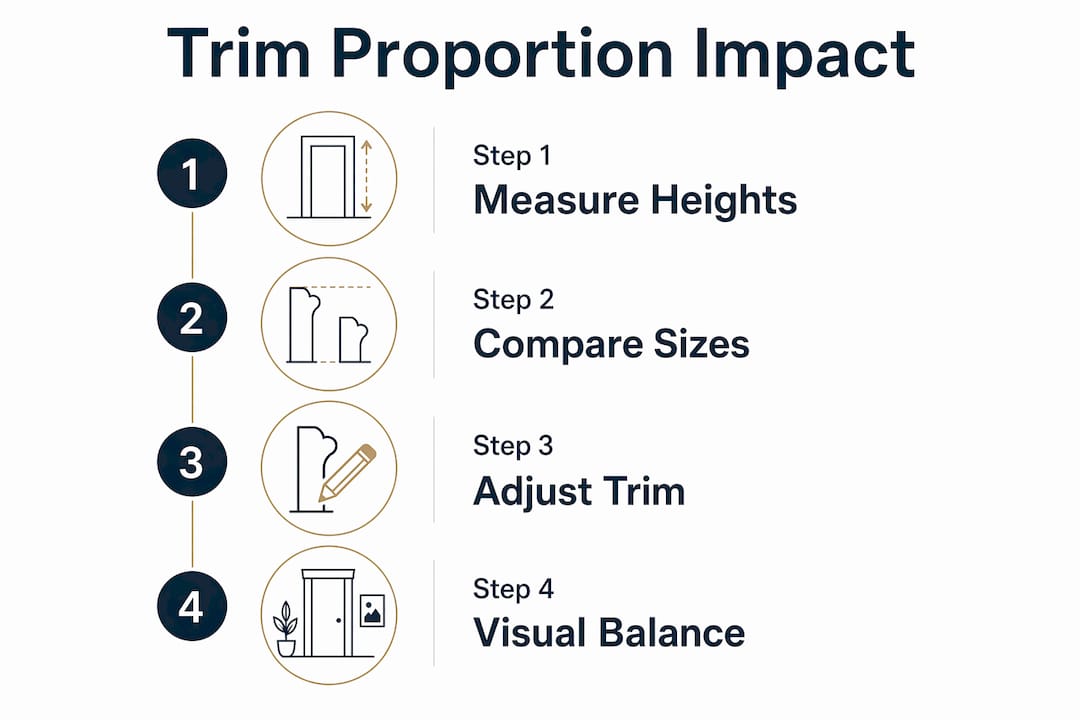
Pro Tip: Photograph your room from the doorway, then sketch the trim dimensions to scale on a printout. Seeing the proportions on paper before purchasing saves costly mistakes.
What role do decorative trimmings play in personalising a space?
Decorative trimmings, known in the trade as passementerie, are the braids, fringes, tassels, and cords applied to curtains, cushions, upholstered furniture, and bed hangings. These details provide playful contrast, movement, and memorable character, marking them as signs of thoughtful interior design rather than off-the-shelf decoration.
The aesthetic value of trimmings lies in what they add beyond the surface:
- Texture contrast: A velvet curtain edged with a woven braid introduces a tactile difference that the eye reads as richness and depth.
- Colour punctuation: A trim in a contrasting or complementary colour draws the eye to the edge of a form, defining its shape more sharply.
- Movement: Fringes and tassels introduce gentle motion, making a room feel alive rather than static.
- Scale and rhythm: Repeating a trim detail across multiple pieces, such as the same braid on curtains and cushions, creates visual rhythm that ties a room together.
Decorative trims contribute to the trend of “quiet luxury” in interiors by blending tradition with modern materials to convey intentional character. Interior design in 2026 has moved decisively away from stripped minimalism toward layered, personal spaces where these details signal discernment rather than excess.
“Trimmings are no longer optional accessories. They are signature details that define a room’s personality. The right braid or tassel on a curtain heading tells you everything about the designer’s intention.”
The distinction between functional and ornamental decoration is worth understanding here. Functional trims protect edges and cover transitions. Ornamental trims exist purely to add beauty and character. The most effective interiors use both, and the best homeowners treat them with equal seriousness.
Why do material and finish choices define long-term aesthetic quality?
The material a trim is made from determines not just how it looks on day one, but how it looks in five years. Solid brass trims with powder-coated luxury finishes maintain their shape and finish over time, preserving design intent and value. That durability is the reason quality-conscious homeowners and contractors choose brass over cheaper alternatives.
Wood, plastic, and aluminium trims all share a common weakness: they degrade visibly under normal household conditions. Wooden trims split when exposed to moisture changes near doorways and bathrooms. Plastic trims bend under foot traffic and discolour with UV exposure. Aluminium trims dent on impact and scratch easily, leaving marks that catch the eye every time you walk past. None of these failures are hypothetical. They are the predictable outcomes of choosing materials that were not built for longevity.
| Feature | Solid brass with powder coat | Wood, plastic, or aluminium |
|---|---|---|
| Resistance to bending | Does not bend | Bends under pressure |
| Resistance to denting | Does not dent | Dents on impact |
| Splitting or cracking | Does not split | Splits with moisture changes |
| Finish longevity | Maintains finish for years | Discolours, fades, or scratches |
| Aesthetic consistency | Consistent across 10 luxury finishes | Finish varies and degrades |
Qualitycarpettrims produces solid brass trims hand-finished in 10 luxury finishes, from satin gold to brushed nickel tones, each designed to complement contemporary and traditional interiors alike. The right finish for your renovation is the one that holds its appearance as long as the flooring it borders. Anything less is a false economy.
How do you select and coordinate trims for a cohesive home?
Selecting trims well requires a clear process, not guesswork. Poorly installed or mismatched trim undermines even expensive finishes, and professional finishers consistently identify trim as a key factor in overall interior aesthetics and buyer impressions. The good news is that a structured approach removes most of the risk.
Follow these principles when planning your trim selections:
- Start with the room’s proportions. Measure ceiling height and floor area before choosing any profile or size. Let the room’s scale dictate the trim dimensions, not personal preference alone.
- Choose one finish and apply it throughout. A single metallic finish across all flooring trims, door bars, and thresholds creates a thread of continuity that the eye follows naturally from room to room.
- Match profile families, not individual pieces. You do not need identical trims everywhere, but profiles from the same visual family (all flat, or all with a single step) read as intentional rather than accidental.
- Use decorative trimmings sparingly in one or two focal areas. A fringe on the curtains and a braid on the cushions in the same room is enough. Applying passementerie to every surface dilutes the impact.
- Plan flooring transitions early. Floor trim trends in 2026 show a strong preference for low-profile brass thresholds that sit flush with the floor plane, minimising visual interruption between rooms.
Pro Tip: Order free samples of your shortlisted finishes and lay them directly on your flooring in natural daylight. Colours shift significantly between showroom lighting and home conditions.
Key takeaways
Trims define the aesthetic quality of an interior by controlling proportion, profile, material, and finish across every transition and edge in the home.
| Point | Details |
|---|---|
| Profile sets the mood | Choose flat, stepped, curved, or layered profiles to match your room’s intended atmosphere and style. |
| Proportion beats intricacy | Correctly scaled trims enhance perceived ceiling height and spatial balance more than ornate profiles do. |
| Decorative trimmings signal quality | Passementerie details like braids and fringes add texture, rhythm, and the character of quiet luxury. |
| Material determines longevity | Solid brass with powder-coated finishes outlasts wood, plastic, and aluminium in both durability and appearance. |
| Consistency creates cohesion | One finish and one profile family applied throughout the home unifies spaces and elevates perceived craftsmanship. |
Why I think trims are the most undervalued decision in any renovation
Homeowners routinely spend weeks choosing paint colours and days choosing flooring, then select trims in five minutes at the end of a project. I have seen this pattern repeatedly, and the results are always the same: a room that looks almost right but never quite finished.
The rooms that genuinely impress are the ones where the trim was planned from the start. The skirting board height was chosen to suit the ceiling. The threshold bar finish was matched to the door hardware. The curtain heading had a braid that echoed the cushion fabric. None of those decisions are expensive. All of them are deliberate.
Proportion is the variable that matters most. A simple, well-proportioned trim in solid brass will outperform an ornate trim in a material that degrades. The DIY installation process is straightforward when the product is built to fit correctly. The mistake is treating trim as a commodity rather than a design decision.
My advice is to plan your trims at the same time you plan your flooring and paint. Decide on the finish first, then work outward to profiles and sizes. You will spend less time correcting mistakes and more time living in a space that looks exactly as you intended.
— Matt
Premium solid brass trims from Qualitycarpettrims
Qualitycarpettrims supplies solid brass flooring trims, door bars, and thresholds hand-finished in 10 luxury finishes, each made in the UK to a standard that cheaper materials cannot match.
Whether you need a matwell flooring trim for a hallway entrance or a carpet to hardfloor door bar between rooms, every product is built from solid brass that will not split, bend, or dent. The range covers carpet, laminate, vinyl, and hard floor transitions, with finishes from satin gold to dark bronze to suit both contemporary and traditional interiors. Free samples are available, and expert advice is on hand to help you match the right profile and finish to your space.
FAQ
What is the role of trims in interior aesthetics?
Trims frame, unify, and define the edges and transitions of an interior space. They shape perceived room size, set the stylistic tone, and signal the quality of the overall finish.
How do I choose the right trim profile for my room?
Match the profile to the room’s intended mood: flat profiles for minimalist spaces, stepped for structured depth, curved for softness, and layered for architectural drama. Apply one profile family consistently throughout the home.
Why does trim proportion affect how a room feels?
Oversized trim in a standard-height room lowers the perceived ceiling, making the space feel smaller. Correctly proportioned trims enhance spatial balance and make a room read as more considered and generous.
What are decorative trimmings and why do they matter?
Decorative trimmings, or passementerie, include braids, fringes, and tassels applied to soft furnishings and window treatments. They add texture, colour contrast, and movement, contributing to the “quiet luxury” aesthetic that defines high-end interiors in 2026.
Why choose solid brass trims over other materials?
Solid brass trims with powder-coated finishes do not split, bend, or dent under normal household conditions. Wood, plastic, and aluminium trims all degrade visibly over time, undermining the aesthetic investment of the wider interior.
Recommended
- Why trims enhance decor: a homeowner’s guide
- The role of trims in home decor: a guide for UK homes
- Why trims matter: choosing the right finish for your renovation
- Residential trim use: a homeowner’s complete guide