
Blog
What Is Vinyl Floor Trim and Why It Matters

Feb
Finding the right finishing touches for your renovation project can feel overwhelming when every detail matters. For British homeowners and DIY enthusiasts, selecting high-quality solid metal vinyl floor trim is more than a style choice—it’s a practical investment protecting edges from moisture and damage while ensuring a polished look. This guide highlights the features, types, and installation tips for solid metal vinyl floor trim, offering clear advice on achieving durable, professional results in UK homes.
Table of Contents
- Defining Vinyl Floor Trim In Modern Interiors
- Types Of Vinyl Floor Trim For Every Need
- Key Features Of Solid Metal Floor Trim
- Choosing And Fitting The Right Trim Profile
- Common Mistakes With Vinyl Floor Trim
Key Takeaways
| Point | Details |
|---|---|
| Importance of Vinyl Floor Trim | Vinyl floor trim is essential for protecting edges, concealing expansion gaps, and enhancing aesthetic appeal in flooring installations. |
| Types of Trim Profiles | Selecting the appropriate trim type, such as T-Moulding or Reducer Strips, is crucial for functional transitions and visual coherence. |
| Common Installation Mistakes | Avoid errors such as insufficient expansion gaps and incorrect profile choices to prevent long-term damage and aesthetic issues. |
| Professional Installation Tips | Accurate measurements and consideration of flooring dynamics are vital for ensuring a polished, durable finish. |
Defining Vinyl Floor Trim in Modern Interiors
Vinyl floor trim represents an essential design and functional element in contemporary interior finishing, specifically engineered to address the unique requirements of resilient flooring installations. Unlike traditional wooden or plastic alternatives, these specialised trims provide a sophisticated solution for protecting floor edges and creating seamless transitions between different surface types.
In modern interior design, vinyl floor trim serves multiple critical purposes:
- Conceals expansion gaps around flooring perimeters
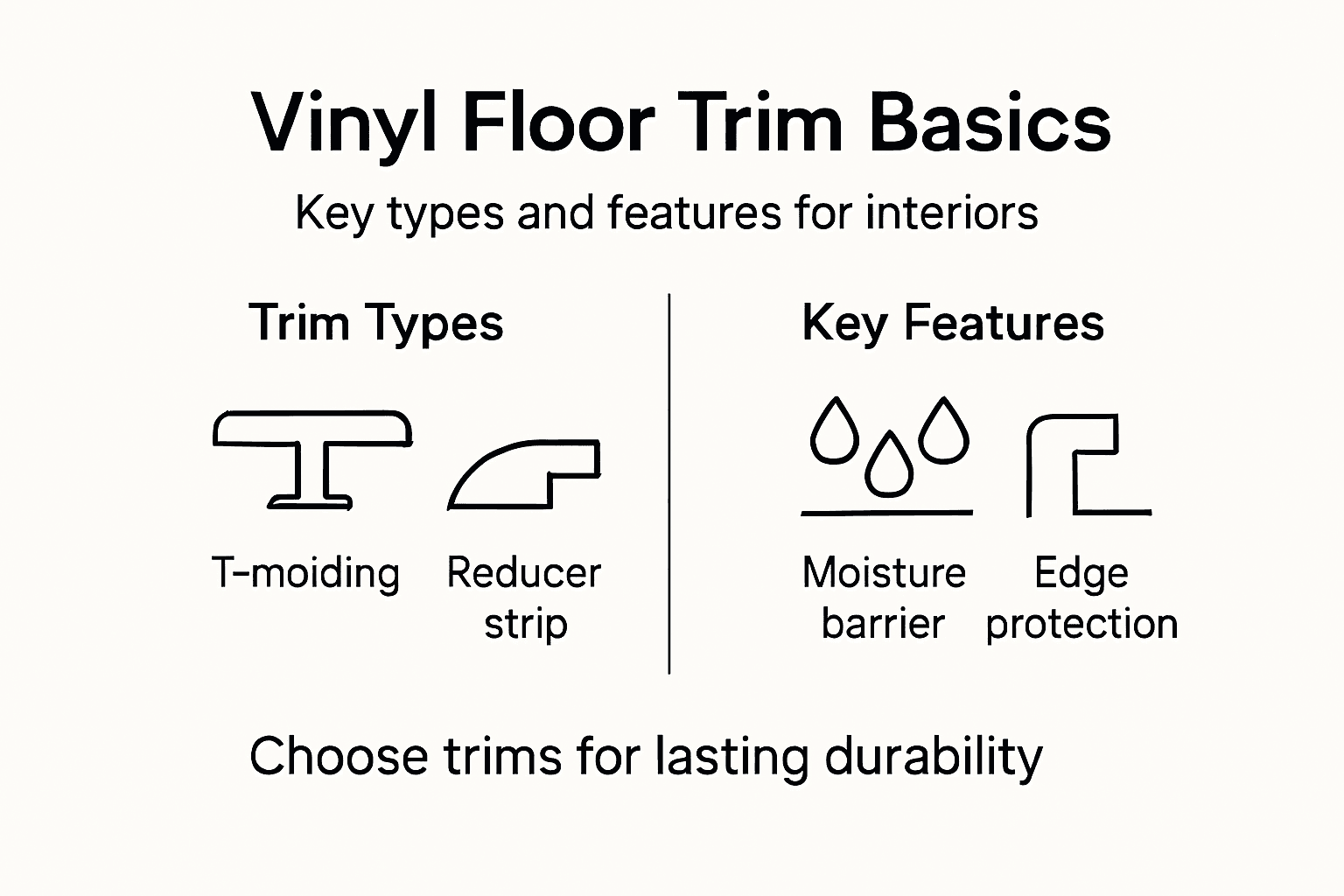
- Protects vulnerable floor edges from moisture and potential damage
- Creates smooth transitions between different floor surfaces
- Enhances overall aesthetic finish of interior spaces
- Provides a professional, polished appearance to flooring installations
Vinyl floor trim is particularly crucial because of the natural expansion characteristics of resilient flooring materials. As temperatures and humidity fluctuate, vinyl flooring materials expand and contract, necessitating strategic edge protection that accommodates these subtle movements without compromising structural integrity.
Vinyl floor trim isn’t just a decorative afterthought – it’s a critical functional component that ensures your flooring remains beautiful and durable for years to come.
The design flexibility of modern vinyl floor trims allows homeowners to select profiles that complement their specific interior aesthetic, ranging from minimalist metallic finishes to more ornate decorative options. This versatility means these trims can integrate seamlessly with various design schemes, from contemporary minimalist spaces to traditional interior environments.
Pro tip: Always measure your expansion gaps precisely before selecting vinyl floor trim to ensure a perfect, professional installation.
Types of Vinyl Floor Trim for Every Need
Vinyl floor trims are not a one-size-fits-all solution, but rather a sophisticated range of specialised profiles designed to address specific flooring transition challenges. Multiple trim types exist to accommodate different installation requirements and aesthetic preferences.
The primary types of vinyl floor trim include:
- T-Molding: Used for joining floors of equal height
- Reducer Strips: Bridging height differences between floor surfaces
- Threshold Moldings: Providing smooth transitions at doorways
- Quarter Round Moldings: Covering expansion gaps along wall edges
- Stair Nosing: Protecting and finishing stair edge transitions
- Baseboards: Creating a polished perimeter finish
- Shoe Molding: Offering additional edge coverage and refinement
Each trim type serves a unique functional purpose beyond mere aesthetic enhancement. Threshold moldings, for instance, not only create a seamless transition between rooms but also provide critical protection against moisture and potential damage at entry points.
Selecting the correct vinyl floor trim is about balancing practicality with design – it’s an investment in both protection and visual appeal.
Designers and homeowners can now choose from an array of finishes and materials that complement their specific interior design scheme. Modern vinyl floor trims come in various colours, textures, and profiles, ensuring that functional requirements do not compromise visual elegance.

The following table compares typical vinyl floor trim profiles and suitable installation scenarios:
| Trim Profile | Ideal Use Case | Best For Rooms With |
|---|---|---|
| T-Moulding | Joining similar-height flooring | Open-plan living areas |
| Reducer Strip | Bridging height differences | Hallways and corridors |
| Threshold Moulding | Doorway transitions | Entranceways |
| Quarter Round | Neatening perimeter edges | Bedrooms and lounges |
Pro tip: Measure your floor transitions carefully and consult a professional to ensure you select the most appropriate trim profile for your specific installation.
Key Features of Solid Metal Floor Trim
Solid metal floor trim represents the pinnacle of durability and sophistication in modern flooring transitions, offering homeowners a premium solution that goes far beyond conventional plastic or wooden alternatives. Precision-engineered metal trims provide unparalleled performance and aesthetic elegance in interior finishing.
The key features of high-quality solid metal floor trim include:
- Exceptional Durability: Resistant to impacts, dents, and wear
- Corrosion Resistance: Maintains appearance and structural integrity
- Precise Dimensional Stability: Minimal expansion or contraction
- Versatile Design Options: Available in multiple finishes and profiles
- Long-term Cost-effectiveness: Outlasts cheaper alternative materials
- Seamless Aesthetic Integration: Complements various interior design styles
Unlike inferior alternatives that split, bend, or deteriorate quickly, solid metal floor trims offer a robust solution for managing floor transitions. These trims are meticulously crafted to withstand daily wear, providing a permanent finishing solution that maintains its pristine appearance for years.
Investing in solid metal floor trim is not an expense, but a long-term enhancement to your property’s interior quality and aesthetic appeal.
Professional installers appreciate the precision engineering of solid metal trims, which allow for exact measurements and seamless installations across different flooring surfaces. The material’s inherent strength enables it to bridge height differences, cover expansion gaps, and create smooth transitions without compromising structural integrity.
Pro tip: Select metal floor trims with powder-coated finishes to ensure maximum protection and a luxurious, long-lasting aesthetic.
Choosing and Fitting the Right Trim Profile
Selecting the appropriate vinyl floor trim profile requires careful consideration of multiple factors, including floor type, height variations, and aesthetic requirements. Proper trim selection is crucial for achieving a professional, long-lasting installation that maintains the integrity of your flooring system.
Key considerations when choosing the right trim profile include:
- Room-specific transition requirements
- Height differences between adjoining floor surfaces
- Expansion gap accommodations
- Aesthetic compatibility with existing interior design
- Material durability and long-term performance
- Ease of installation and maintenance
Vinyl floor trims are not merely decorative elements but critical components that facilitate smooth transitions between different flooring surfaces. Professional installers understand that each trim profile serves a specific functional purpose, whether bridging height differences, covering expansion gaps, or creating seamless visual connections.
The right trim profile transforms a basic floor installation into a refined, professional-looking finish that enhances your entire interior space.
Installation demands precision and technical understanding. Critical steps include measuring accurately, leaving appropriate expansion gaps, and securing trims without restricting floor movement. Unlike cheaper alternatives that crack or split, high-quality metal trims allow for natural flooring expansion while maintaining a pristine appearance.
Pro tip: Always leave a 10mm expansion gap around room perimeters and ensure trims are fitted loosely to allow for natural floor movement.
Common Mistakes with Vinyl Floor Trim
Homeowners and DIY enthusiasts often underestimate the complexity of vinyl floor trim installation, leading to costly errors that compromise flooring integrity. Common installation mistakes can result in significant long-term damage and aesthetic disappointments.
The most prevalent mistakes include:
- Nailing trim directly into vinyl flooring
- Failing to leave adequate expansion gaps
- Choosing inappropriate trim profiles
- Ignoring moisture protection requirements
- Cutting trims without precision
- Neglecting proper subfloor preparation
- Using incorrect adhesive or fastening techniques
Many individuals mistakenly believe that floor trims are merely decorative elements, overlooking their critical functional role in protecting floor edges and managing structural movements. These errors can lead to buckling, moisture infiltration, and premature flooring deterioration.
Here’s a summary of the consequences of common vinyl trim installation mistakes:
| Mistake | Potential Long-term Result |
|---|---|
| Insufficient expansion gaps | Flooring buckling or warping |
| Wrong trim profile | Poor visual integration |
| Inadequate moisture protection | Water damage at floor edges |
| Directly nailing trims to floor | Cracking or restricted movement |
Vinyl floor trim is not just a finishing touch – it’s a crucial technical component that requires professional-level attention and understanding.
Professional installers recognise that each trim selection demands careful consideration of floor type, room conditions, and potential environmental stresses. Cheaper alternatives or hasty installations invariably result in unsightly transitions, potential damage, and reduced flooring longevity.
Pro tip: Invest time in thorough measurement and consultation before purchasing trim to avoid costly retrofitting or replacement.
Secure and Stylish Vinyl Floor Trim Solutions for Lasting Interiors
Choosing the right vinyl floor trim is essential to protect your flooring edges, accommodate expansion gaps, and achieve a flawless finish in any interior space. Many struggle with trims that crack, appear unsuitable, or fail to endure daily wear, risking the beauty and durability of their floors. At Quality Carpet Trims, we understand these challenges and offer expertly crafted solid metal floor trims designed to blend seamlessly with your design vision while providing robust protection and long-term performance.

Experience the difference of hand-finished solid metal trims available in 10 exquisite finishes, specifically engineered to handle expansion needs and transitions without compromise. Whether you are a DIY enthusiast or a professional installer, our British-made trims deliver both aesthetic elegance and structural strength. Explore our comprehensive range and get expert guidance to select the exact profile that meets your project needs now at Quality Carpet Trims. Your floors deserve nothing less than perfection.
Frequently Asked Questions
What is vinyl floor trim and what purpose does it serve?
Vinyl floor trim is a type of finishing element used in interior flooring installations, designed to protect floor edges, conceal expansion gaps, and create seamless transitions between different types of flooring.
Why is it important to use vinyl floor trim?
Vinyl floor trim is essential because it provides protection against moisture, prevents damage to flooring edges, and helps maintain a polished appearance in interior spaces. It also accommodates the expansion and contraction of resilient flooring materials.
What are the different types of vinyl floor trim?
The main types of vinyl floor trim include T-molding, reducer strips, threshold moldings, quarter round moldings, stair nosing, baseboards, and shoe molding. Each type serves specific functional and aesthetic purposes for various flooring scenarios.
How should I choose the right vinyl floor trim profile for my installation?
When selecting a vinyl floor trim profile, consider factors such as room-specific transition requirements, height differences between flooring surfaces, aesthetic compatibility, and the need for moisture protection. Accurate measurement and consultation are also crucial for achieving a professional finish.
Recommended
- Vinyl Floor Edge Trim – Quality Carpet Trims
- how to finish vinyl floor edges Archives – Quality Carpet Trims
- vinyl tile edge trim Archives – Quality Carpet Trims
- vinyl edge trim Archives – Quality Carpet Trims
- What Is Siding Replacement and Why It Matters