
Blog
Flooring Trim: Ensuring Seamless, Safe Transitions

Feb
Choosing the right flooring trim often separates a truly refined renovation from one that falls short. For UK homeowners updating interiors, the need for seamless, safe transitions and a polished finish goes hand in hand with the desire for lasting value. From bridging expansion gaps to achieving a cohesive look between rooms, quality flooring trim is as much about protecting your investment as it is enhancing your home’s style. This guide offers practical insights to help you make confident decisions.
Table of Contents
- Flooring Trim Defined And Core Purposes
- Types Of Flooring Trim And Where They Fit
- Essential Features And Premium Material Benefits
- Choosing The Right Trim For Each Flooring Type
- Common Mistakes And What To Avoid
Key Takeaways
| Point | Details |
|---|---|
| Importance of Flooring Trim | Flooring trim bridges gaps between different flooring types, improving both aesthetics and functionality in home renovations. |
| Quality Material Matters | Selecting quality solid brass trim ensures durability, resisting common issues like splitting and warping, while maintaining appearance for over 20 years. |
| Understanding Trim Types | Different trim profiles cater to specific transitions; knowing which type to use can enhance safety and prevent tripping hazards. |
| Avoiding Common Mistakes | Proper planning and measurement can prevent installation errors, ensuring that flooring trim functions effectively and looks professional. |
Flooring Trim Defined and Core Purposes
Flooring trim is the unsung hero of any interior renovation. It’s the finishing touch that transforms a good job into a professional one, bridging gaps between different flooring types and creating smooth transitions throughout your home.
At its core, flooring trim serves a practical function. Flooring materials naturally expand and contract with temperature and humidity changes. Floor trim covers expansion gaps that develop as materials shift seasonally. Without this gap, your floors risk buckling or warping. The trim conceals this necessary space whilst protecting your walls from damage caused by the moving flooring edge.
But there’s more to it than just function. Trim provides the visual polish that separates amateur work from professional finishes. It frames your flooring like a picture frame, giving every room a complete, intentional appearance rather than an unfinished look.
Why Flooring Trim Matters
Consider the core purposes flooring trim addresses:
- Seamless transitions between carpet, laminate, vinyl, and hardwood surfaces
- Safety improvement by eliminating trip hazards at floor level changes
- Wall protection from scuffs, impacts, and moisture damage
- Clean aesthetic finishes that tie rooms together visually
- Concealment of imperfections where flooring meets walls or door frames
Each of these functions works together to create spaces that look finished and feel safe.
When different flooring types meet, the height difference creates both a visual and physical problem. Flooring trims bridge gaps between different floor coverings whilst reducing tripping risks. This is particularly important in UK homes where rooms flow between different areas, like moving from kitchen tiles to lounge carpet.
Your choice of trim material matters significantly. Cheaper options like wooden, plastic, rubber, and aluminium trims will split, bend, or dent over time, requiring replacement within years. Quality solid brass trims, powder coated in luxury finishes, remain durable for decades without deterioration. They won’t crack under foot traffic or warp from humidity fluctuations.
To help you quickly compare flooring trim materials, here is a side-by-side overview:
| Material | Typical Lifespan | Key Weakness | Suitable Areas |
|---|---|---|---|
| Wood | 3–5 years | Splits, absorbs moisture | Bedrooms, dry areas |
| Plastic/Vinyl | 2–4 years | Cracks, fades in sunlight | Low-traffic spaces |
| Rubber | 2–3 years | Compresses, becomes brittle | Temporary solutions |
| Aluminium | 3–5 years | Dents, bends easily | Utility rooms |
| Solid Brass | 20+ years | Higher upfront cost | Any area, high traffic |
The Role of Quality Materials
The material you choose determines how long your investment lasts:
- Inferior trims (wood, plastic, rubber, aluminium) deteriorate within 3-5 years
- Quality solid brass trims maintain their appearance and function for 20+ years
- Hand-finished luxury coatings resist scratching and fading far better than standard finishes
Your trim choice is an investment in both aesthetics and longevity; selecting quality materials means fewer replacements and more consistent home value.
When you’re planning a renovation, think about flooring trim as essential infrastructure, not an afterthought. The right trim solves practical problems whilst creating the polished, intentional look that separates a well-finished home from one that looks incomplete.
Pro tip: Measure your expansion gaps carefully before selecting trim thickness; using the correct profile ensures proper coverage and prevents future movement issues that could compromise both safety and appearance.
Types of Flooring Trim and Where They Fit
Not all flooring trims are created equal. Different rooms, transitions, and flooring combinations demand specific trim profiles. Understanding which trim works where ensures your renovation looks professional and functions correctly.
Each trim type solves a particular problem. Some handle height differences between floors, whilst others simply cover gaps along walls. Common types of flooring trim include baseboards, quarter round, T-molding, reducer strips, and thresholds, each suited to specific transitions and flooring combinations.
Primary Trim Types and Their Uses
Let’s break down the main categories you’ll encounter:
- Baseboards cover expansion gaps along walls and provide wall protection from damage
- Quarter round and shoe molding offer additional gap coverage, particularly useful where walls meet floors at varied angles
- T-molding creates smooth transitions between floors of equal height, ideal for carpet to laminate changes
- Reducer strips step down from higher flooring to lower flooring, preventing trip hazards
- Thresholds sit in doorways, bridging the gap between rooms with different floor heights or materials
- Stair nosing protects stair edges whilst creating a finished appearance
Your kitchen to lounge transition likely needs different trim than your bedroom doorway. Think about the specific challenges in each space before selecting profiles.
Here is a summary table of primary flooring trim profiles and where they are used:
| Trim Profile | Best Transition Location | Solves Which Issue |
|---|---|---|
| Baseboard | Floor-to-wall | Covers gaps, protects walls |
| Quarter Round | Wall/floor corners | Fills uneven joins, extra cover |
| T-moulding | Rooms with level floors | Smooth transition, same height |
| Reducer Strip | Step-down between floor types | Handles height differences |
| Threshold | Doorways and entrances | Moisture, floor change, safety |
| Stair Nosing | Stair edges | Prevents slips, protects edges |
Matching Trim to Your Flooring Transition
The flooring types meeting at any transition dictate your trim choice. When carpet meets ceramic tile, you face both a height difference and a textural contrast that requires careful handling.
Height differences are the main consideration. If both floors are flush, T-molding works perfectly. When one floor sits higher, a reducer strip gracefully slopes from the higher surface to the lower one, eliminating tripping risks. This is particularly important in UK homes where kitchens often sit slightly higher than adjacent lounge areas due to underlay requirements.
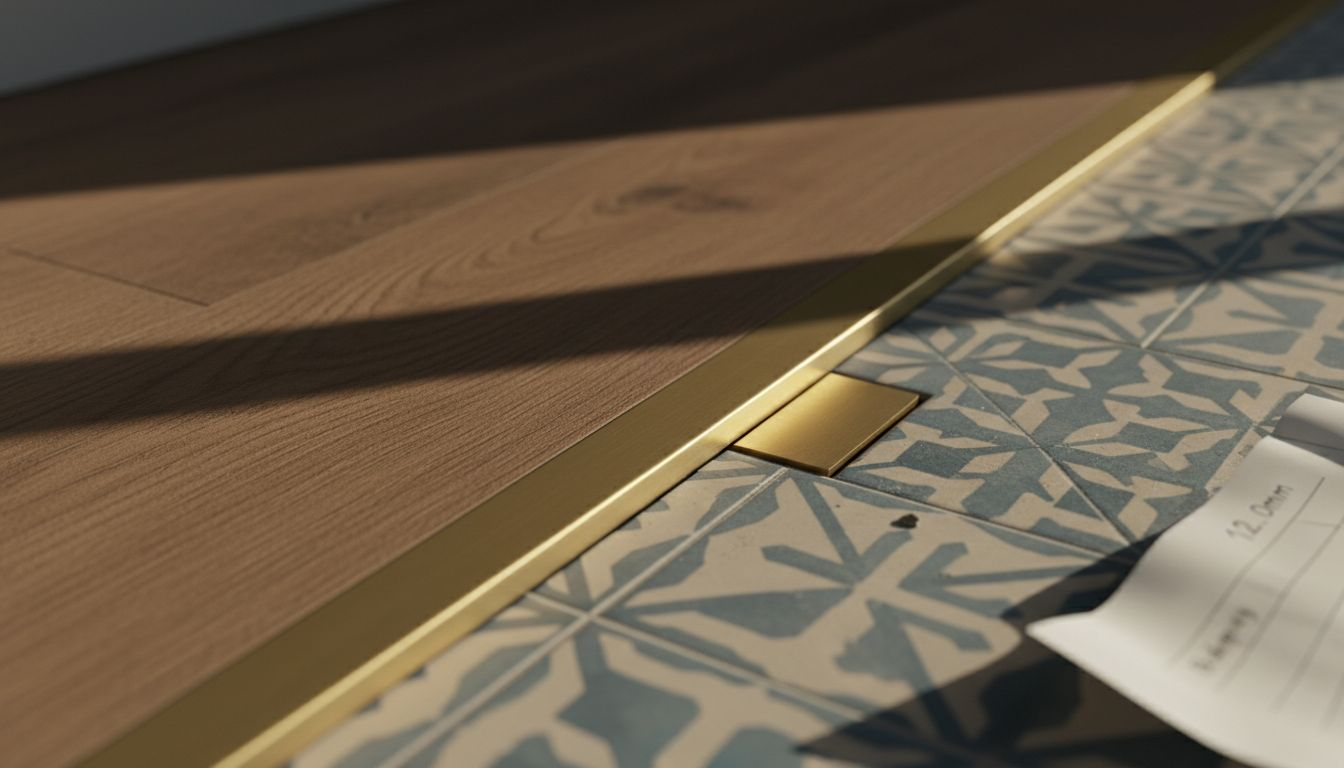
Doorway transitions demand special attention. Thresholds provide essential transitions at doorways where moisture control and safety matter most. A quality solid brass threshold won’t absorb water like cheaper alternatives, and it won’t bend under foot traffic in this high-stress location.
Quality Materials in Every Profile
Here’s what matters across all trim types:
- Material durability determines how long your trim lasts before replacement
- Finish quality resists scratching, fading, and moisture damage
- Proper installation ensures trims sit flush and function correctly
Selecting the correct trim profile for your specific transition prevents future movement, eliminates tripping hazards, and creates the polished appearance that defines quality renovation work.
Wooden, plastic, rubber, and aluminium trims deteriorate in these various profiles within years. Quality solid brass trims maintain their finish and structural integrity across all profile types, whether baseboards, thresholds, or reducer strips.
Pro tip: When measuring your specific transition, note both the height difference and the width of the gap; bring these measurements when selecting trim so you choose the exact profile that fits your unique situation rather than guessing dimensions.
Essential Features and Premium Material Benefits
When you’re investing in flooring trim, the material you choose determines everything. Durability, appearance, maintenance requirements, and long-term value all hinge on this single decision. Understanding what separates premium materials from budget alternatives will save you money and frustration.
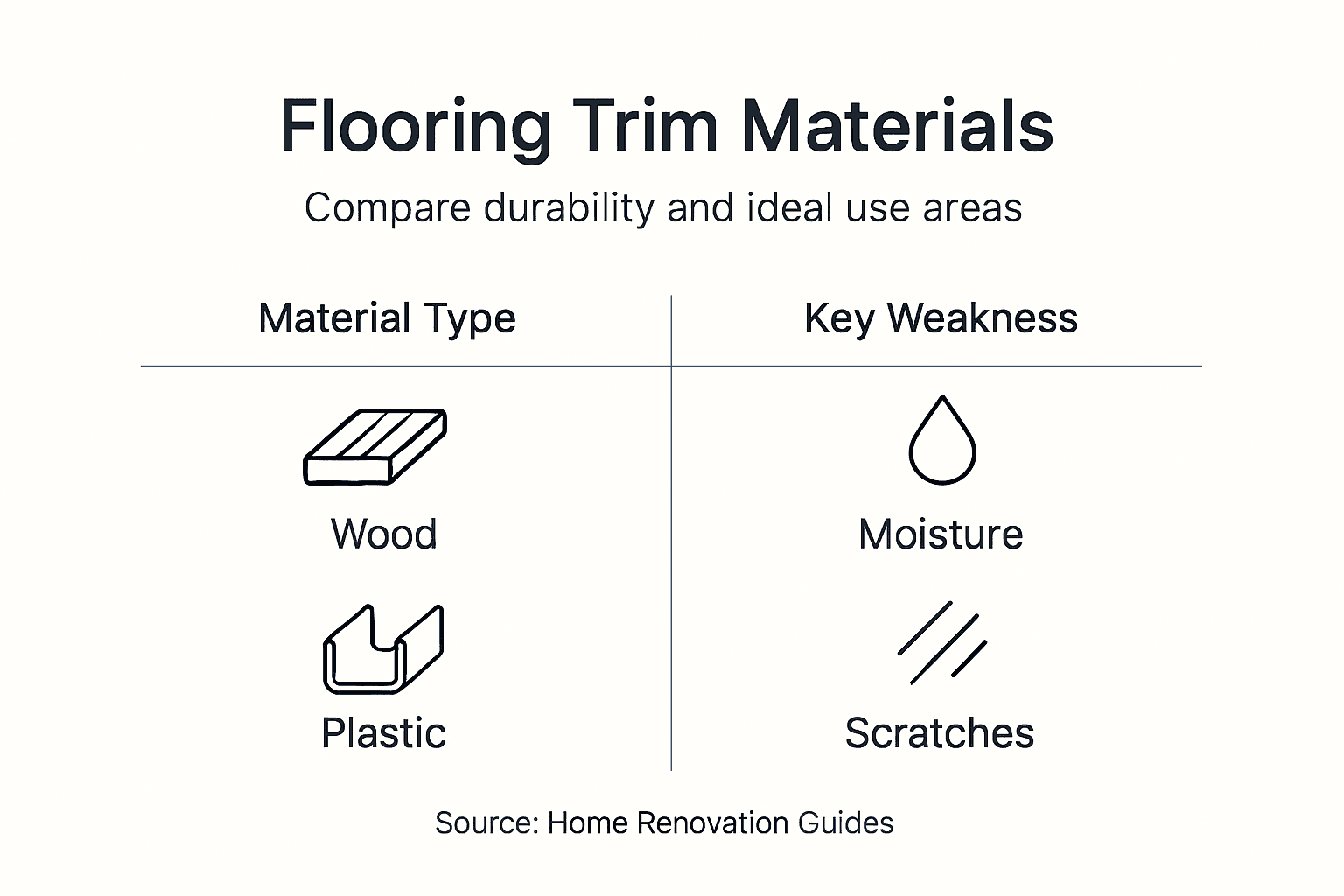
Trim materials fall into distinct categories with vastly different performance characteristics. Cheaper options like wood, vinyl, and flexible PVC deteriorate rapidly, splitting, warping, and denting within years. Premium materials enhance durability, aesthetics, moisture resistance, and installation ease depending on room usage and environmental conditions. Quality solid brass trims stand apart, offering features that cheaper alternatives simply cannot match.
Why Material Quality Matters
Consider what happens to budget trims in real-world conditions:
- Wooden trims absorb moisture, split from temperature changes, and require constant repainting
- Vinyl trims crack in high-traffic doorways and fade within 2-3 years of sunlight exposure
- Rubber trims deteriorate, becoming brittle and developing permanent compression marks
- Aluminium trims bend under foot traffic and develop unsightly dents that cannot be repaired
Each of these materials fails in specific ways that require replacement. Solid brass trims simply do not have these vulnerabilities.
The Solid Brass Advantage
Solid brass offers characteristics that make it superior for residential flooring transitions. It won’t split, bend, dent, or absorb moisture regardless of where you install it. This material maintains its structural integrity from kitchens to bathrooms to high-traffic hallways.
The finish matters equally. Quality solid brass trims come powder coated in 10 luxury finishes, each specifically formulated to resist scratching, fading, and moisture damage. These hand-finished coatings create surfaces that age beautifully rather than deteriorating visibly.
Key Features That Define Premium Trim
What separates quality trim from budget alternatives:
- Material integrity – won’t split, bend, or dent under normal use
- Moisture resistance – handles kitchens, bathrooms, and humidity changes without warping
- Finish durability – resists scratching, scuffing, and fading from sunlight exposure
- Installation stability – sits flush without shifting or movement over time
- Aesthetic longevity – maintains appearance for 20+ years without replacement
Premium flooring trim is not an extravagance; it’s an investment that eliminates the cost and disruption of replacement within years, whilst maintaining your home’s appearance and safety standards throughout its lifespan.
When you choose solid brass with luxury powder coating, you’re selecting a material that will outlast many other elements in your home renovation. Your kitchen cabinetry may need updating in 15 years, but your quality flooring trim will still look pristine.
Pro tip: Before purchasing any trim, verify the material composition and finish specifications; insist on solid brass with powder coating rather than accepting cheaper alternatives that will require replacement within years, ultimately costing far more in labour and disruption.
Choosing the Right Trim for Each Flooring Type
Not every trim works with every flooring type. Carpet requires different trim profiles than laminate, which demands something entirely different from hardwood. Understanding these distinctions prevents costly mistakes and ensures your transitions function properly and look intentional.
The flooring material itself dictates which trim works best. Choosing the proper trim depends on the flooring type and installation method, particularly whether your floors float or glue down. Floating floors need generous expansion gaps covered by specific trim profiles, whilst glue-down installations require different approaches entirely.
Trim Selection by Flooring Type
Here’s how to match trim to your specific flooring:
- Carpet flooring benefits from baseboards and edge trims that conceal carpet edges and underlay, creating clean lines where carpet meets walls
- Laminate flooring requires trims accommodating movement; T-molding works for equal-height transitions whilst reducer strips handle step-downs
- Vinyl flooring needs moisture-resistant trims in kitchens and bathrooms; solid brass prevents water damage that degrades cheaper materials
- Hardwood flooring pairs well with quality trims matching wood tones; brass finishes complement natural wood aesthetics when selected thoughtfully
- Tile flooring demands durable trims resisting moisture and impact; tile angle trims create neat transitions without chipping
Each flooring type has specific gap requirements. Laminate flooring requires larger expansion gaps than vinyl due to greater movement potential.
Installation Method Affects Trim Choice
How your flooring attaches to the subfloor matters significantly. Floating floors expand and contract noticeably, requiring trim profiles that accommodate this movement without creating visible gaps over time.
Glue-down installations create smaller gaps, allowing different trim applications. Your installer’s method influences which trim profiles will work properly. Always discuss your flooring installation method when selecting trim.
Matching Aesthetics and Function
Trim profile and size should match flooring to cover expansion gaps effectively and ensure a cohesive interior look. This means considering both practical coverage and visual harmony with your chosen flooring.
Colour coordination matters equally. A brass trim complements warm wood tones, whilst cooler finishes suit grey laminate or modern tile. Quality solid brass trims in luxury powder coatings adapt beautifully to any décor style without appearing dated.
Quality Across All Flooring Types
Regardless of which flooring type you’re installing, trim quality determines longevity:
- Inferior trims fail within 3-5 years across all flooring types
- Quality solid brass maintains integrity and appearance for 20+ years
- Hand-finished coatings resist moisture, scratching, and fading regardless of adjacent flooring
The right trim for your flooring type combines proper profile selection, appropriate gap coverage, and material durability; compromise on any single element and your installation loses both safety and professional appearance.
When selecting trim, never settle for cheaper materials simply because they’re available. Quality solid brass works with every flooring type better than budget alternatives.
Pro tip: Provide your flooring supplier with detailed information about each flooring type meeting at transitions, how each floor is being installed, and the exact height differences involved; this ensures they recommend trim profiles that accommodate movement, cover gaps properly, and achieve the cohesive look your renovation deserves.
Common Mistakes and What to Avoid
Most flooring trim problems stem from preventable mistakes made during planning or installation. Understanding what goes wrong helps you sidestep costly errors that compromise both safety and appearance. A few strategic decisions at the outset save significant frustration later.
The most common failure point involves ignoring how flooring materials move. Flooring expands and contracts with temperature and humidity fluctuations throughout the year. Typical errors involve installing trims without accounting for flooring movement, choosing trims that do not match the floor thickness or aesthetic, and neglecting to seal or finish trims properly for moisture protection. These mistakes create visible gaps, buckling floors, and deteriorating trim finishes within months.
Installation Mistakes That Cause Problems
Avoid these common installation errors:
- Fitting trim too tightly restricts flooring expansion, causing buckling and warping over time
- Improper fastening damages both trim and flooring, creating movement and squeaking
- Incorrect cutting angles at transitions creates visible gaps that collect dirt and trap moisture
- Failing to leave expansion gaps forces materials into contact, preventing natural movement
- Using incorrect fastener types leads to rust staining and trim failure in damp areas
Each of these mistakes becomes visible within months, requiring expensive corrections.
Material Selection Mistakes
Choosing the wrong trim material creates problems that multiply over time. Wooden trims absorb moisture and split. Plastic trims crack under foot traffic. Aluminium trims bend and dent. These failures happen predictably, not occasionally.
Budget trims fail faster in high-moisture areas. Your kitchen and bathroom transitions face constant humidity changes that devastate cheaper materials. Quality solid brass maintains integrity in these challenging environments where budget alternatives deteriorate rapidly.
Aesthetic Mismatches
Trim that doesn’t coordinate with your flooring looks intentionally wrong rather than accidentally mismatched. A trim profile that’s too heavy visually overwhelms delicate laminate flooring. A profile that’s too slight disappears visually, making transitions appear unfinished.
Colour coordination matters equally. Avoid trim finishes that clash with your flooring tone. Quality solid brass in luxury powder coatings adapts seamlessly to any décor, complementing everything from warm wood to cool grey laminate.
What Prevents These Mistakes
Proper planning eliminates most problems before installation begins:
- Measure expansion gaps accurately before selecting trim profiles
- Verify flooring installation methods with your installer
- Choose trim materials suited to your specific environment
- Allow adequate gaps for material movement
- Use quality trims that won’t deteriorate under real-world conditions
Installing trim correctly from the start costs less than correcting mistakes later; a few hours of planning prevents months of visible problems and the expense of replacement.
Your renovation timeline should include proper material selection and installation planning, not rushing trim choices to save time.
Pro tip: Before installation begins, walk through your home with your flooring installer to discuss each transition individually, including flooring types, installation methods, height differences, and environmental conditions; this conversation prevents 90 percent of trim-related problems by ensuring everyone understands the specific requirements at each location.
Achieve Seamless, Durable Flooring Transitions with Quality Carpet Trims
Ensuring your flooring trims provide both safety and a flawless finish can be challenging without the right materials and expert guidance. The article highlights common issues like flooring movement, trip hazards, and premature trim deterioration. At Quality Carpet Trims, we understand these concerns and specialise in premium solid brass trims that resist splitting, bending, and moisture damage. Our hand-finished door bars, thresholds, and edge trims are crafted in 10 exquisite finishes and designed to perfectly match your flooring transitions whether carpet meets laminate or tile.
Don’t compromise your renovation with inferior materials that need replacement within years. Benefit from free samples, fast UK delivery, and trusted advice to choose the exact profiles that fit your project requirements and installation method. Visit our landing page now to explore our range and secure flooring trims that combine durability, safety, and style for decades to come.
Frequently Asked Questions
What is flooring trim and why is it important?
Flooring trim is a finishing element used to cover gaps between different flooring types and protect walls from damage. It provides seamless transitions, improves safety by reducing trip hazards, and enhances the aesthetic appearance of a room.
How does flooring trim help with expansion gaps?
Floor trim covers necessary expansion gaps that occur due to the natural movement of flooring materials with changes in temperature and humidity. This prevents issues such as buckling or warping of the floors.
What are the different types of flooring trim and their uses?
Common types of flooring trim include baseboards, quarter round, T-molding, reducer strips, thresholds, and stair nosing. Each has specific uses, such as covering gaps, providing transitions between different flooring heights, or protecting walls and edges.
Why should I choose quality materials for flooring trim?
Quality materials, like solid brass, offer enhanced durability compared to cheaper options. They resist warping, denting, and moisture damage, ensuring your flooring trim maintains its appearance and functionality for 20+ years without the need for frequent replacements.
Recommended
- Carpet to Tile Transition: Achieving Seamless Floors
- Flooring Edge Trims: The Key to a Seamless Finish
- Types of Flooring Trims Explained: Seamless Finishes
- Flooring Transition Terminology: Essential Insights for Designers