
Blog
Home flooring thresholds: your guide to seamless finishes

Mar
Most people walk through a doorway without giving a second thought to the strip of metal sitting at their feet. Yet that small piece of trim is doing serious work. Flooring thresholds protect floor edges, cover expansion gaps, prevent trip hazards, and tie together the visual flow of a room. Whether you are a homeowner refreshing a hallway or a contractor finishing a commercial fit-out, understanding how thresholds work will save you time, money, and a great deal of frustration.
Table of Contents
- What is a flooring threshold?
- Types of home flooring thresholds
- Why thresholds matter for flooring durability and design
- How to choose the right threshold strip
- Installation tips for home flooring thresholds
- Find the perfect threshold strip for your project
- Frequently asked questions
Key Takeaways
| Point | Details |
|---|---|
| Thresholds ensure safety | Flooring thresholds prevent trip hazards and create seamless transitions between rooms. |
| Durability depends on type | Choosing the right threshold material protects floor edges and withstands foot traffic. |
| Expansion gaps matter | Proper gaps and compatible trims prevent buckling and damage, especially in timber and floating floors. |
| Installation follows best practice | Accurate measuring, material choice, and gap allowance are crucial for fitting thresholds in UK homes. |
| Explore specialist options | Specialised trims such as matwell or expansion strips address unique room and floor needs. |
What is a flooring threshold?
A flooring threshold is a strip installed at the junction between two rooms or two different floor surfaces. It sits at the point where one floor type ends and another begins, such as where carpet meets laminate in a doorway, or where tiles give way to hardwood in an open-plan space.
Thresholds do far more than look tidy. They bridge floor gaps and support structural movement, which is critical in homes where different materials expand and contract at different rates. Without a threshold, you risk exposed edges, cracked boards, and a lip that catches feet and causes falls.
Common materials include solid metal, wood, and plastic, though quality varies enormously between them. You can read a broader flooring trim overview to understand how thresholds fit into the wider family of floor finishing products. The material you choose will directly affect how long your threshold lasts and how well it performs under daily use.
Types of home flooring thresholds
Not all thresholds are the same, and choosing the wrong type is one of the most common mistakes in flooring installations. Each style is designed for a specific scenario, and using the right one makes the difference between a professional finish and a bodged job.
Here are the main types you will encounter:
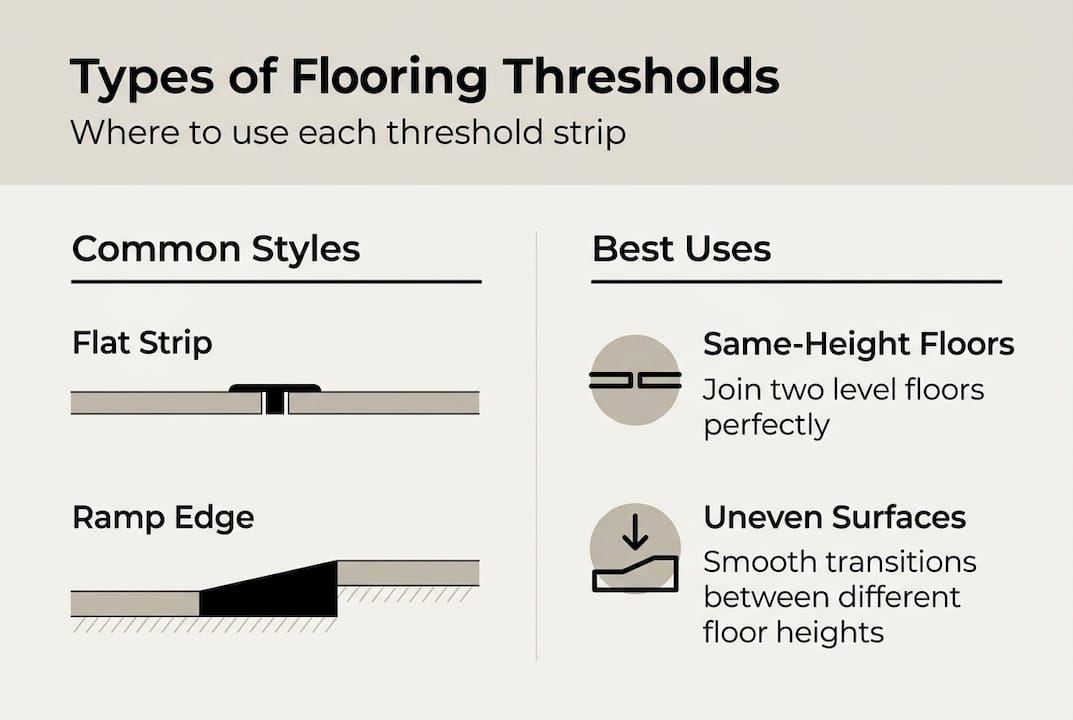
- Flat threshold strips: Used where two floors sit at the same height. Ideal for room-to-room transitions where both surfaces are level.
- Ramp threshold strips: Designed for floors at different heights. The angled profile creates a gradual slope rather than an abrupt step.
- Double-edged strips: Used where two carpeted areas meet, holding both edges neatly in place.
- Matwell trims: Fitted around entrance mat recesses to create a clean, defined border and protect both the mat and the surrounding floor.
- Expansion threshold trims: Specifically designed for floating floors such as laminate and vinyl. Different threshold styles suit different flooring types, and trims for floating floors are engineered to allow independent movement without cracking or lifting.
When choosing trim types, always consider the height difference between your two floors and the type of movement each surface will experience. You can also explore dedicated carpet threshold options if you are joining two carpeted areas.
| Threshold type | Typical use | Height difference | Movement compatibility |
|---|---|---|---|
| Flat strip | Same-height floors | None | Low |
| Ramp strip | Different-height floors | Up to 10mm | Low to medium |
| Double-edged strip | Carpet to carpet | None | Low |
| Matwell trim | Entrance mat areas | Minimal | Low |
| Expansion trim | Laminate, vinyl, floating floors | Variable | High |
Why thresholds matter for flooring durability and design
Skipping a threshold might seem like a minor shortcut, but the consequences can be costly. Here is why they matter far more than most people realise.
- Trip hazard prevention: An exposed floor edge, particularly where two surfaces sit at different heights, is a genuine safety risk. A well-fitted threshold eliminates that hazard immediately.
- Moisture protection: Thresholds seal the gap between floors, reducing the chance of water or dirt working its way underneath and causing swelling or mould.
- Expansion management: Thresholds accommodate expansion gaps and prevent buckling, which is vital in timber and floating floor systems where a 10 to 15mm perimeter gap is standard practice.
- Aesthetic cohesion: A threshold in a matching finish ties two rooms together visually. It signals that the installation was completed with care and attention to detail.
- Edge protection: Without a threshold, the edges of laminate, carpet, and hardwood are exposed to foot traffic and will fray, chip, or lift over time.
“A threshold is not an afterthought. It is the last line of defence between a floor that lasts a decade and one that starts failing within a year. Get the gap right, get the trim right, and the rest takes care of itself.”
Pro Tip: Always check the manufacturer’s guidelines for your specific flooring product before installation. Expansion requirements vary between brands, and using the wrong gap size can void your warranty. You can learn more about the role of thresholds in achieving a lasting finish, and explore the specific benefits for laminate if that is your primary floor type.
How to choose the right threshold strip
With so many options available, narrowing down the right threshold for your project comes down to a handful of key decisions. Get these right and everything else follows naturally.
Consider your flooring types. The surfaces on either side of the threshold determine which profile you need. Carpet to laminate requires a different solution than tile to hardwood. Always identify both surfaces before purchasing.
Match the material to your durability needs. Solid metal thresholds outperform wood and plastic in almost every scenario. They resist moisture, handle heavy foot traffic, and maintain their finish for years. Plastic and wood alternatives may be cheaper upfront but tend to crack, warp, or discolour over time.
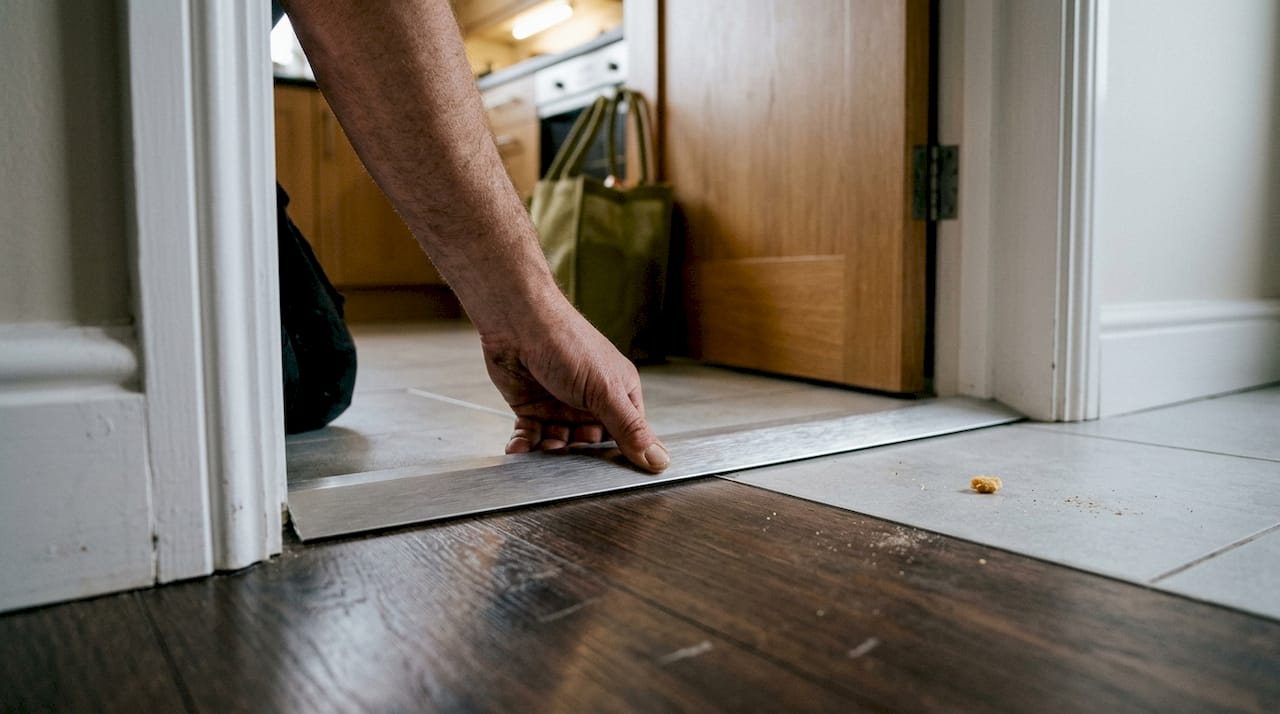
Factor in room traffic and moisture. Kitchens, bathrooms, and hallways need thresholds that can handle both heavy use and occasional water exposure. A solid metal strip with a durable hand-applied finish is the sensible choice in these areas.
Here are the most common mistakes to avoid:
- Ignoring the expansion gap and fitting the threshold too tightly against the floor
- Choosing a threshold that is too narrow to cover the full gap
- Mismatching the height profile, creating a lip rather than a smooth transition
- Selecting a finish that clashes with the surrounding door frame or skirting board
- Buying based on price alone rather than material quality
For floating floors like laminate and vinyl, use trims that allow independent movement. For solid timber, a 10 to 15mm perimeter gap is crucial to prevent buckling. You can browse laminate threshold options or look at specific carpet to tile solutions depending on your project.
Pro Tip: Order a free sample before committing to a full purchase. Holding the finish against your actual floor in your own lighting conditions is the only reliable way to confirm a colour match.
Installation tips for home flooring thresholds
A threshold is only as good as its installation. Even the highest-quality strip will fail if it is fitted incorrectly. Follow these steps for a clean, lasting result.
- Measure the doorway width accurately. Use a steel tape measure and measure twice. Most threshold strips can be cut to length with a fine-tooth saw or metal cutting blade.
- Select the correct strip profile. Confirm the height difference between your two floors and choose the appropriate threshold type from the options covered earlier.
- Prepare the surfaces. Both floor edges should be clean, dry, and free from adhesive residue or debris. Any unevenness greater than 2mm should be levelled before fitting.
- Confirm the expansion gap. Before securing the threshold, check that the required gap is present on both sides. Proper installation prevents buckling by allowing the floor to move freely beneath the trim.
- Secure the trim. Depending on the product, this may involve screwing a base track into the subfloor or using a strong flooring adhesive. Follow the manufacturer’s instructions precisely.
| Floor type | Minimum recommended expansion gap |
|---|---|
| Solid timber | 10 to 15mm |
| Engineered wood | 8 to 12mm |
| Laminate | 8 to 10mm |
| Vinyl (LVT) | 5 to 8mm |
| Carpet | Not applicable |
If your threshold feels loose after fitting, the base track may not be anchored into solid material. Re-drill into a more stable area of the subfloor. If the floor is buckling near the threshold, the expansion gap is likely too small and the trim needs to be repositioned. For further guidance on fitting threshold strips or understanding metal threshold installation, detailed fitting guides are available to walk you through each stage.
Regular maintenance is straightforward. Wipe metal thresholds with a damp cloth and mild detergent. Inspect them annually for signs of lifting, corrosion, or damage, particularly in high-moisture areas.
Find the perfect threshold strip for your project
Now that you understand how thresholds work and what to look for, the next step is finding the right product for your specific floor and finish.

At Quality Carpet Trims, we supply solid metal threshold strips that are hand-finished in 10 beautiful finishes, from polished brass to satin chrome, designed to complement any interior. Every strip is made in the UK and built to last. You can explore the full range of detailed threshold types to find the right profile for your project, browse our matwell trim options for entrance areas, or visit our threshold terminology guide if you want to get fully up to speed with the language of flooring trims before you buy. Free samples are available, and our team is on hand to help you get it right first time.
Frequently asked questions
Do I need a threshold strip between carpet and laminate flooring?
Yes. A threshold strip provides a safe, seamless transition and protects both edges from wear and fraying. It also covers the expansion gap that laminate requires.
How wide should the expansion gap be for timber floors?
A 10 to 15mm perimeter gap is the standard recommendation for solid timber floors to allow for natural seasonal movement and prevent buckling.
Can thresholds be fitted over uneven floors?
Thresholds can accommodate slight unevenness, but major floor discrepancies should be levelled with a self-levelling compound before installation to ensure a secure, flat fit.
Which material is best for high-traffic thresholds?
Solid metal thresholds are the best choice for heavy foot traffic. They resist wear and moisture damage far better than wood or plastic alternatives and maintain their appearance over time.
What is the purpose of a matwell trim?
A matwell trim creates a neat, defined border around an entrance mat recess, protecting both the floor and mat edges from damage and giving the entrance area a clean, finished appearance.
Recommended
- Understand the role of flooring thresholds for a perfect finish
- Blog – Quality Carpet Trims
- Installing Flooring Edge Trims for Seamless Floor Transitions
- Flooring Trim: Ensuring Seamless, Safe Transitions