
Blog
What is a vinyl transition strip? A complete guide for 2026

Mar
You might assume that once your vinyl flooring is laid, the job is done. Yet skipping transition strips can expose your floors to edge damage, create trip hazards, and even void warranties. Understanding what vinyl transition strips are, how they work, and why they matter transforms a good floor into a safe, durable, and professional finish. This guide clarifies the types, installation best practices, and durability insights UK homeowners and contractors need in 2026.
Table of Contents
- What Is A Vinyl Transition Strip And Why Is It Important?
- Types Of Vinyl Transition Strips And Their Specific Uses
- How To Install Vinyl Transition Strips: Best Practices And Tips
- Durability, Maintenance And Common Mistakes To Avoid
- Find High-Quality Vinyl Transition Strips At Quality Carpet Trims UK
- Frequently Asked Questions
Key takeaways
| Point | Details |
|---|---|
| Safety and aesthetics | Vinyl transition strips bridge gaps between floor types or heights, preventing trips and delivering neat finishes. |
| Main types available | T-moulding, reducers, end caps, and UK-specific Ali Tramline strips serve different transition needs. |
| Installation essentials | Proper fitting accounts for expansion gaps, underfloor heating, and accurate measurements for long-term performance. |
| Durability benchmarks | Aluminium strips last up to 20 years in high-traffic areas, whilst vinyl offers budget-friendly waterproof protection. |
| Risks of skipping strips | Missing transition strips causes edge damage, noise, trips, and can void flooring warranties. |
What is a vinyl transition strip and why is it important?
A vinyl transition strip is a narrow strip made from vinyl or matching materials used to bridge gaps between different flooring types or heights in vinyl flooring installations, ensuring smooth, safe, and aesthetically pleasing transitions. These strips serve multiple critical functions beyond simply filling a gap. They protect vulnerable floor edges from chipping, cracking, or moisture ingress, particularly where luxury vinyl tiles meet carpet, tile, or hardwood. Without them, the exposed edges deteriorate rapidly under foot traffic.
Transition strips eliminate trip hazards by creating a flush or gently sloped surface between floors of different heights. A 3mm height difference might seem negligible, but it poses a genuine risk, especially for elderly residents or young children. The benefits of vinyl transition strips extend to noise reduction as well, dampening the hollow sound that can occur when walking across unprotected vinyl edges. This matters in flats or multi-storey homes where sound transmission affects neighbours.
Aesthetically, transition strips deliver a polished, intentional look. They frame each flooring zone, making the design feel deliberate rather than haphazard. Colour-matched or contrasting strips can complement your décor, whilst metallic finishes add a contemporary edge. For waterproof vinyl installations in bathrooms or kitchens, transition strips seal the perimeter, preventing water from seeping beneath the floor and causing subfloor damage.
“Transition strips are not optional extras. They are structural components that extend floor lifespan, maintain warranty coverage, and protect occupants from injury.”
Key reasons to install vinyl transition strips include:
- Preventing edge damage and extending floor life by 30-40%
- Eliminating trip hazards in doorways and room transitions
- Reducing noise transmission between rooms and floors
- Maintaining waterproof integrity in wet areas
- Delivering a professional finish that enhances property value
For vinyl floor edge trim applications, choosing the right profile ensures your installation meets both safety standards and design expectations. Skipping this step not only compromises aesthetics but can void manufacturer warranties, leaving you liable for premature floor failure.
Types of vinyl transition strips and their specific uses
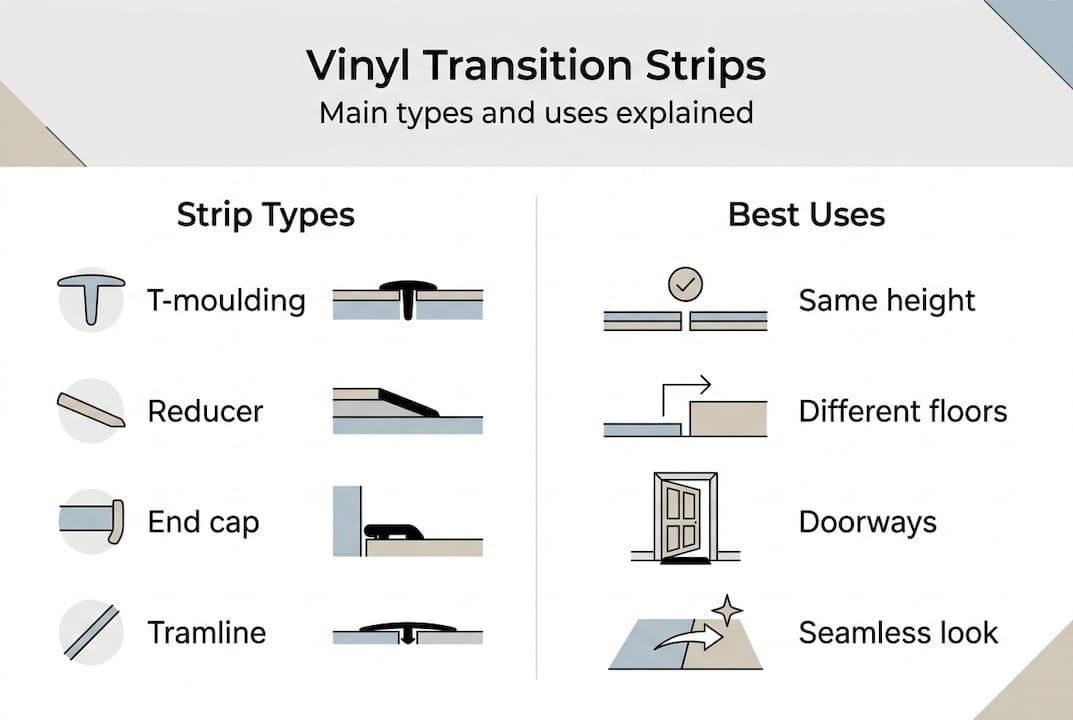
Understanding which transition strip suits your project prevents costly mistakes and ensures optimal performance. Key types include T-moulding for same-height floors, reducer strips for height differences, end caps for edges or doorways, and UK-specific options like Ali Tramline with recesses for vinyl inserts. Each profile addresses distinct transition challenges.
T-moulding strips work when both floors sit at the same height, typically vinyl to vinyl or vinyl to laminate. The T-shaped profile slots into a track between the two surfaces, allowing each floor to expand independently. This matters for floating floors, which shift slightly with temperature and humidity changes. Without a T-moulding, the floors would press against each other, causing buckling or gapping.
Reducer strips handle height differences, commonly where vinyl meets carpet or tile. The sloped profile creates a gradual transition, preventing the abrupt edge that causes trips. Reducer strips come in various heights, from 3mm to 15mm, so measure your floor difference accurately before ordering. A mismatch here creates an awkward, unsafe transition.
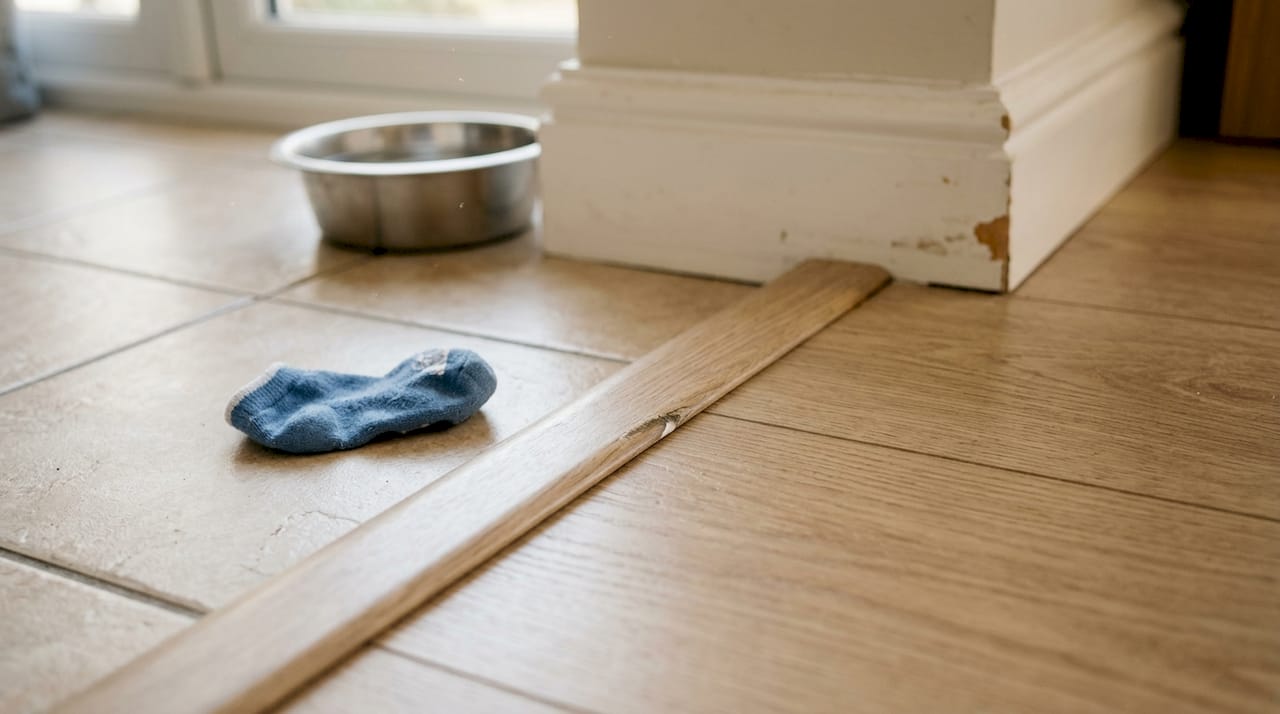
End caps and threshold strips secure vinyl edges at doorways, stairs, or room perimeters. End caps provide a finished edge where vinyl terminates against a wall or vertical surface. Thresholds span doorways, protecting the floor edge from heavy foot traffic whilst providing a clean visual break between rooms. These strips often feature screw-down or adhesive installation for maximum stability.
Ali Tramline strips, unique to the UK market, feature a recessed channel that accepts a strip of matching vinyl flooring. This creates an almost invisible transition, as the strip blends seamlessly with the surrounding floor. Tramline strips suit contemporary designs where minimalism is key, though they require precise cutting and fitting of the vinyl insert.
| Strip type | Best for | Height difference | Material options |
| — | — | — |
| T-moulding | Vinyl to vinyl, same height | 0mm | Vinyl, aluminium |
| Reducer | Vinyl to carpet/tile, different heights | 3-15mm | Vinyl, aluminium |
| End cap | Perimeter edges, stairs | N/A | Vinyl, aluminium |
| Threshold | Doorways, high traffic | 0-5mm | Aluminium, brass |
| Ali Tramline | Minimalist transitions, vinyl insert | 0mm | Aluminium |
Material choice affects durability and aesthetics. Vinyl strips are budget-friendly, flexible, and waterproof, ideal for bathrooms or kitchens. Aluminium strips offer superior durability, lasting up to 20 years in high-traffic areas, and resist scratches better than vinyl. For transition strips for uneven floors, adjustable profiles accommodate subfloor irregularities without compromising safety.
Consider these factors when selecting strips:
- Floor height difference and expansion requirements
- Traffic levels and expected wear patterns
- Moisture exposure in bathrooms or kitchens
- Aesthetic preferences and colour matching
- Installation method compatibility with underfloor heating
Choosing the correct profile from the start saves time, money, and ensures your floor performs as intended. For complex transitions or vinyl floor edge trim applications, consulting a specialist prevents mismatched products and installation headaches.
How to install vinyl transition strips: best practices and tips
Proper installation determines whether your transition strips deliver decades of service or fail within months. Installation methodologies include measuring the gap, cutting the strip to length, using adhesive or track systems, allowing 5-16mm expansion gaps for floating vinyl, and centring the strip under doors. For underfloor heating, avoid screws that puncture heating elements.
Follow this step-by-step process for reliable results:
- Measure the gap width and length accurately using a tape measure, accounting for any irregularities in the doorway or transition zone.
- Cut the transition strip to the exact length using a fine-toothed saw or guillotine, ensuring clean, square edges that fit snugly.
- Position the strip centrally in the gap, checking that it sits flush with both floor surfaces and allows for expansion gaps on either side.
- For track systems, install the track first using adhesive or screws (avoid screws over underfloor heating), then snap the visible strip into place.
- For adhesive installations, apply a continuous bead of flooring adhesive to the subfloor, press the strip firmly, and wipe away excess immediately.
- Allow the adhesive to cure fully before allowing foot traffic, typically 24 hours, to ensure maximum bond strength.
- For Ali Tramline strips, cut a matching vinyl insert to fit the recessed channel, press it in firmly, and trim any overhang with a sharp knife.
Expansion gaps are non-negotiable for floating vinyl floors like LVT, WPC, or SPC. These floors expand and contract with temperature and humidity changes, and without adequate gaps, they buckle or peak. Leave 5-10mm gaps around the perimeter and under transition strips, concealing the gap with the strip profile. Rigid vinyl requires less expansion space than flexible vinyl, so check manufacturer guidelines.
Pro tip: When installing vinyl floor edge trim in doorways, centre the strip under the closed door so it sits half on each floor. This creates a symmetrical appearance and ensures the door clears the strip when opening. Measure the door clearance before selecting a strip profile to avoid binding.
For underfloor heating installations, adhesive or clip systems are essential. Screws can puncture heating pipes or cables, causing expensive damage and voiding heating warranties. Adhesive provides sufficient hold for most residential applications, whilst clip systems offer easy removal if you need to access the subfloor later.
Common installation errors include:
- Cutting strips too short, leaving visible gaps at the ends
- Ignoring expansion gaps, causing floor buckling
- Using screws over underfloor heating systems
- Misaligning strips, creating uneven transitions
- Applying insufficient adhesive, leading to loose strips
For detailed guidance on transition strips installation, including video tutorials and product-specific instructions, consult specialist resources. The doorway thresholds installation guide offers visual step-by-step support for complex transitions.
Durability, maintenance and common mistakes to avoid
Durability benchmarks show vinyl strips are budget-friendly, versatile, and waterproof, whilst aluminium lasts up to 20 years in high-traffic areas, protecting edges from wear and reducing noise. Proper installation extends floor life significantly, as confirmed by industry standards. Understanding material performance helps you select strips that match your project’s demands.
Vinyl transition strips typically last 10-15 years in residential settings, though heavy traffic or moisture exposure can reduce this. They resist water damage, making them ideal for bathrooms and kitchens, but can scratch or dent under heavy furniture. Aluminium strips withstand greater abuse, maintaining their appearance and function for two decades or more. Brass and stainless steel options offer similar longevity with added aesthetic appeal.
Maintenance is straightforward. Sweep or vacuum regularly to remove grit that can scratch the strip surface. Wipe spills immediately to prevent staining, especially on lighter-coloured vinyl strips. For aluminium strips, occasional polishing with a metal cleaner restores shine and removes scuff marks. Avoid abrasive cleaners that can dull the finish or damage protective coatings.
“The difference between a 10-year floor and a 25-year floor often comes down to transition strip quality and installation precision. Skipping this step is the most expensive shortcut you can take.”
Common mistakes that compromise durability include:
- Skipping transition strips entirely, exposing floor edges to rapid deterioration
- Choosing mismatched colours that clash with flooring, creating visual discord
- Ignoring expansion requirements, causing strips to pop loose or floors to buckle
- Using incorrect fixing methods, such as screws over underfloor heating
- Failing to seal strip edges in wet areas, allowing moisture penetration
Pro tip: For vinyl edge trim durability in high-traffic zones like hallways or commercial spaces, specify aluminium or brass strips. The initial cost premium pays for itself through extended lifespan and reduced replacement frequency.
Risks from poor installation extend beyond aesthetics. Loose strips create trip hazards, particularly dangerous for elderly residents. Gaps around strips allow moisture to seep beneath the floor, causing subfloor rot or mould growth. Buckling floors from inadequate expansion gaps can crack tiles or damage vinyl planks, requiring costly repairs. Many flooring warranties explicitly require proper transition strip installation, so skipping this step voids coverage.
Noise reduction benefits are often overlooked. Transition strips dampen the hollow sound when walking across vinyl edges, improving acoustic comfort. This matters in flats or homes with open-plan layouts where sound travels freely. The strip acts as a buffer, absorbing impact and reducing transmission to lower floors.
When are transition strips unnecessary? In rare cases where vinyl continues seamlessly through a doorway without meeting another floor type, you might skip the strip. However, most manufacturers still recommend end caps or thresholds to protect edges and maintain warranty coverage. For avoiding common installation mistakes, consult product guidelines and seek professional advice when uncertain.
Expert insights from transition strip durability studies confirm that material choice and installation quality are the primary determinants of long-term performance. Invest in quality strips and proper fitting to maximise your flooring investment.
Find high-quality vinyl transition strips at Quality Carpet Trims UK
Now that you understand the importance of vinyl transition strips, selecting the right supplier ensures your project succeeds. Quality Carpet Trims specialises in British-made solid metal door bars, hand-finished in 10 beautiful finishes to complement any interior. Our range includes profiles for every transition challenge, from same-height joins to complex multi-level installations.

We offer expert guidance tailored to UK flooring standards, helping you choose trims that match your floor type, traffic levels, and design preferences. Fast online ordering and nationwide delivery mean your project stays on schedule. Explore our matwell flooring trim options for specialist applications, or read our guide on flooring trim types explained to understand which finish suits your home. For premium solutions, our premier vinyl floor edge trim collection delivers durability and style that lasts decades.
Frequently asked questions
What is a vinyl transition strip?
A vinyl transition strip is a narrow profile that bridges gaps between different flooring types or heights, ensuring smooth, safe transitions. It protects floor edges, prevents trips, and delivers a professional finish.
Do I need transition strips for vinyl flooring?
Yes, transition strips are essential for protecting floor edges, maintaining warranty coverage, and preventing trip hazards. Skipping them causes premature edge damage and can void flooring warranties.
How do I choose between T-moulding and reducer strips?
Use T-moulding when both floors are the same height, such as vinyl to vinyl. Choose reducer strips when floors differ in height, like vinyl to carpet or tile, to create a safe, gradual slope.
Can I install transition strips over underfloor heating?
Yes, but use adhesive or clip systems instead of screws to avoid puncturing heating elements. This maintains heating efficiency and prevents costly damage to pipes or cables.
How long do vinyl transition strips last?
Vinyl strips last 10-15 years in residential settings, whilst aluminium strips can last up to 20 years in high-traffic areas. Proper installation and regular maintenance extend lifespan significantly.
What is an Ali Tramline strip?
Ali Tramline strips are UK-specific transition profiles with a recessed channel that accepts a matching vinyl insert, creating an almost invisible transition. They suit minimalist designs where seamless aesthetics are prioritised.
Recommended
- Transition Strip – Quality Carpet Trims
- What is a flooring transition: guide for UK homeowners 2026
- Installing carpet to vinyl transitions with metal trims
- What is a carpet transition? Your 2026 pro guide