
Blog
Edge trims: essential for safe, stylish UK flooring

Apr
TL;DR:
- Properly chosen edge trims protect flooring edges, reduce trip hazards, and improve interior finish.
- Brass trims outperform other materials in durability, safety, and visual appeal for high-traffic areas.
- Selecting the correct type and material of trim enhances safety, longevity, and overall interior quality.
Most homeowners treat edge trims as an afterthought, something to sort out once the main flooring is down. That thinking costs money, looks, and sometimes safety. The right edge trim does far more than tidy up a join between two floor surfaces. It protects vulnerable flooring ends, absorbs natural expansion movement, and creates a finished look that separates a professional result from a DIY bodge. Fitted correctly, quality trims can reduce trip hazards by up to 30% compared to bare, unfinished transitions. This guide covers everything you need to know: types, materials, practical selection, and fitting advice.
Table of Contents
- What are edge trims and why are they essential in interiors?
- Comparing types of flooring edge trims and their ideal uses
- Material choices: finding the right edge trim for your space
- Practical considerations for choosing and fitting edge trims
- A designer’s insight: what most guides miss about edge trims
- Find the perfect edge trim for your next project
- Frequently asked questions
Key Takeaways
| Point | Details |
|---|---|
| Edge trims boost safety | Correct trims can cut trip hazards by up to 30% and secure flooring edges. |
| Material choices matter | Brass offers superior strength and durability, while wood is best avoided in wet settings. |
| Style and function unite | Edge trims are essential for both seamless looks and long-lasting finishes in your home. |
| Right profile, right room | Selecting the correct trim type for each transition ensures a perfect and practical result. |
What are edge trims and why are they essential in interiors?
An edge trim is a narrow profile, usually made from metal, fitted along the exposed or meeting edge of a floor covering. Its job sounds simple, but the role it plays is surprisingly significant. Without a trim, the raw edge of carpet, laminate, or vinyl is left unprotected. Foot traffic wears it down quickly. The flooring can lift, fray, or crack. And the gap between two different floor surfaces becomes a genuine trip risk, especially for elderly visitors or young children.
Edge trims solve all of that. They hold the flooring edge securely, cover any expansion gap left during installation, and create a smooth visual and physical transition between surfaces. Think of them as the full stop at the end of a sentence. Without them, the room feels unfinished, no matter how beautiful the flooring itself might be.
For anyone working on interior projects, understanding the edge trim essentials is a genuine shortcut to better results. The main types you will encounter include:
- End Profile: Caps the exposed edge of a single floor surface, such as carpet meeting a step or a tiled area ending at a wall.
- Threshold or Door Bar: Bridges two different floor types across a doorway, the most commonly used trim in residential properties.
- Reducer or Ramp: Eases the height difference between two floor surfaces, creating a gentle slope rather than an abrupt step.
- T-Mould: Joins two floors of equal height, typically used between two rooms with the same or similar flooring.
- Z-Bar: Handles height differences where one surface sits notably higher than the other.
- Scotia or Quadrant: A curved profile used along skirting boards or at floor-to-wall junctions to conceal gaps.
Each of these flooring transition types serves a distinct purpose. Choosing the wrong one is a common mistake, and it shows immediately once the room is finished. A seamless finish with edge trims depends entirely on selecting the correct profile for the specific junction you are dealing with.
Comparing types of flooring edge trims and their ideal uses
Once you understand what trims do, the next step is matching the right type to the right location. Not every trim works in every situation, and getting this wrong can create new problems rather than solving old ones.
Here is a quick comparison of the main trim profile types and where each one works best:
| Trim type | Best use | Room examples |
|---|---|---|
| End Profile | Single exposed edge, e.g. carpet to step | Stairs, hallways, landings |
| Threshold / Door Bar | Two different floors meeting at a doorway | All doorways, corridors |
| Reducer / Ramp | Height difference between two floors | Kitchen to lounge, tiled to laminate |
| T-Mould | Two floors of equal height | Room-to-room joins, open-plan spaces |
| Z-Bar | Significant height difference | Laminate to thick carpet |
| Scotia / Quadrant | Floor-to-wall junction | Skirting boards, bay windows |
In high-traffic areas such as hallways and corridors, durability matters most. A door bar that flexes or lifts under constant foot traffic becomes a hazard. In bathrooms and kitchens, moisture resistance is the priority. In lounges and bedrooms, the visual finish tends to take precedence because traffic is lighter.
For doorways between a tiled kitchen and a carpeted lounge, a Reducer or Ramp trim is often the smartest choice. The height difference between a thick carpet and a thin tile can be significant, and a flat T-Mould simply will not bridge it safely. Getting advice on installing flooring edge trims before you commit to a profile can save a wasted trip to the supplier.
For open-plan spaces, where one large room transitions between hard floor and soft floor zones, a T-Mould creates a clean, almost invisible line. It is one of the most underused trims in modern interiors, yet it solves one of the most common design challenges. Knowing which profile suits your space is the foundation of professional trim methods that hold up over years of daily use.
Material choices: finding the right edge trim for your space
The type of trim you choose matters. But the material it is made from matters just as much, if not more. Material affects how long your trim lasts, how it looks over time, and whether it performs safely in the environment you are fitting it into.
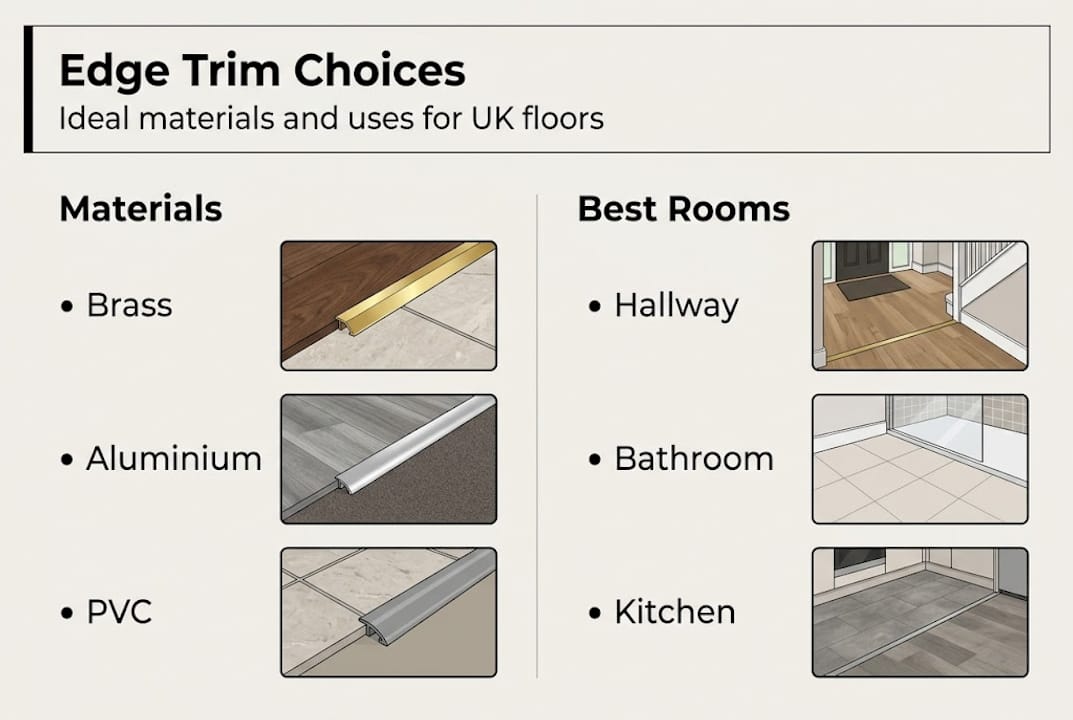
Here is a summary of the main material options and their practical implications:
| Material | Durability | Moisture resistance | Best rooms | Notes |
|---|---|---|---|---|
| Brass | Excellent | Very high | All areas, especially high-traffic | Lasts 2 to 3 times longer than aluminium |
| Aluminium | Moderate | Good | Low to medium traffic | Can bend under heavy use |
| PVC | Low to moderate | Good | Low-traffic, budget fits | Flexible but less durable |
| Wood / MDF | Low | Poor | Dry rooms only | Warps in moisture-prone areas |
Brass stands apart from the rest. It is denser, more resistant to corrosion, and holds its shape far better under heavy use than aluminium. Brass trims outperform aluminium in both longevity and safety, particularly in busy hallways, commercial entrances, and anywhere that sees consistent foot traffic day after day.
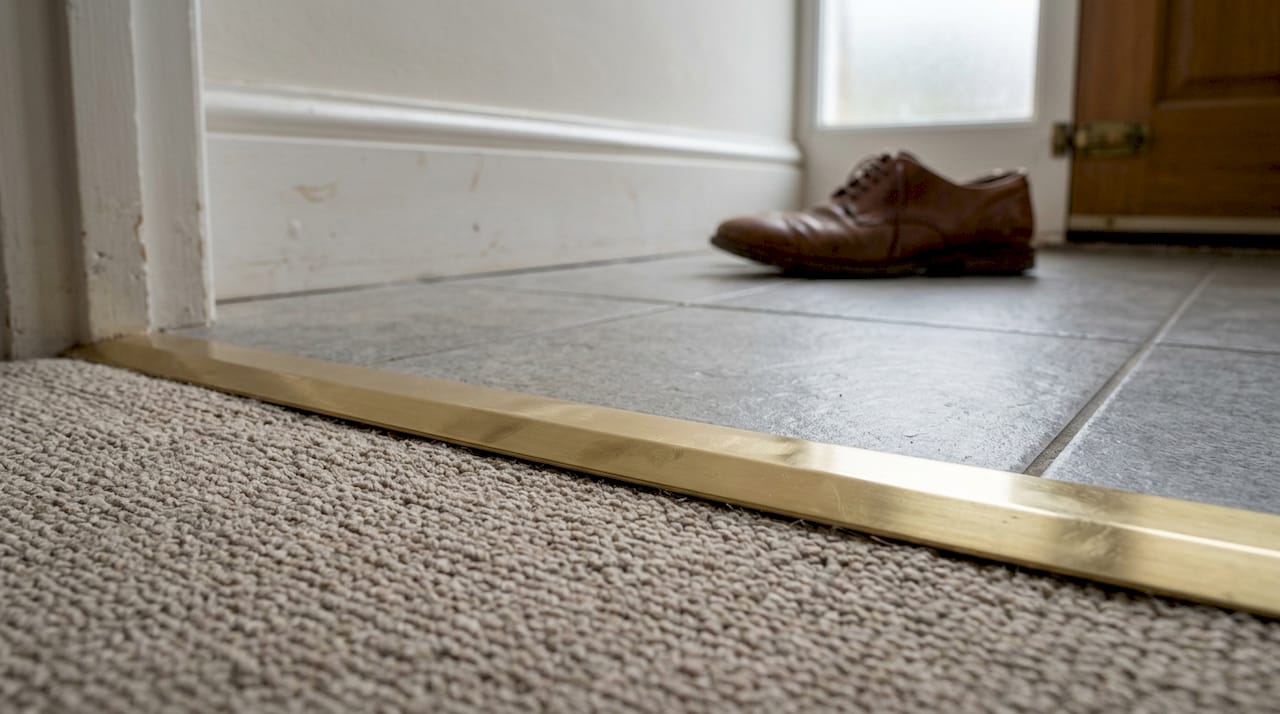
PVC is flexible and affordable, making it a reasonable choice for low-traffic rooms or temporary installations. However, it can crack over time and rarely looks as refined as a solid metal finish. Wood and MDF trims have their place in dry rooms where matching the warm tones of timber flooring is the priority. The moment moisture enters the picture, though, wood becomes a liability. It warps, swells, and eventually rots.
For anyone serious about selecting carpet trims or hard floor profiles that will genuinely last, brass is the material to focus on. It is not the cheapest option upfront, but the long-term value is clear when you consider how rarely it needs replacing.
Pro Tip: When choosing the right trim for any area that sees regular footfall, always prioritise brass over lighter materials. The finish holds, the profile stays firm, and you will not be revisiting the job in two years.
Practical considerations for choosing and fitting edge trims
Knowing your materials and profiles is one thing. Applying that knowledge on a real project is where things can go wrong if you are not careful. Here is a straightforward process to follow:
- Assess the junction. Identify exactly what two surfaces are meeting and the height difference between them.
- Measure accurately. Measure the width of the doorway or transition point. Most trims are available in standard lengths that can be cut to size.
- Select the correct profile. Use the comparison table above to match the trim type to your specific situation.
- Match the colour and finish. A brass trim in a satin or polished finish can complement most interior palettes. Take a photo of the room to a supplier if you are unsure.
- Prepare the surface. Ensure both floor surfaces are fully fitted and secure before fitting the trim.
- Fix correctly. Follow the manufacturer’s fixing method. For solid floors, screwing through a track is the most secure approach.
- Check the finish. Run your hand across the fitted trim. There should be no sharp edges or raised sections that could catch a foot.
Common pitfalls include fitting wood trims in bathrooms or utility rooms, skipping the expansion gap beneath the trim, and rushing the fixing so the profile sits unevenly. Each of these mistakes shortens the life of the trim and the flooring around it.
“For reliability and longevity, especially under heavy wear, brass is the material that consistently outperforms the alternatives. It is the professional’s choice for good reason.”
Pro Tip: When fixing into hard flooring such as tile or concrete, pre-drill pilot holes before driving screws. It gives you a cleaner fix, prevents cracking, and keeps the trim sitting perfectly flat.
For larger or commercial trim installation projects, the stakes are higher and the fitting process needs to be even more precise. Understanding carpet edge trim durability before specifying materials for a commercial space can prevent costly replacements down the line.
A designer’s insight: what most guides miss about edge trims
Most articles about edge trims focus on function. Get the right profile, use the right fixings, job done. But there is something deeper going on that rarely gets discussed.
Trims are the punctuation of interior design. They are the detail that tells you whether someone cared about the finish or just wanted it done. When we see a beautifully laid floor that ends in a tatty plastic strip, the whole room feels cheaper. Conversely, a solid brass trim in a hand-finished tone elevates even a modest floor into something that looks considered and deliberate.
From experience, the homes and commercial spaces that attract the most admiration are rarely the ones with the most expensive flooring. They are the ones where every detail, including the trims, was chosen with intention. Brass finishes in particular add a subtle warmth and quality that visitors notice without always knowing why.
The hidden cost of cutting corners on trims is real. Cheap materials fail faster, create safety issues, and often need replacing before the flooring itself does. The smarter approach is to plan your trims at the same time as your flooring, not as a last-minute addition. Explore how stylish interiors with trims can genuinely transform the feel of a space when chosen with care.
Find the perfect edge trim for your next project
If this guide has shown you anything, it is that the right edge trim is never just a finishing touch. It is a decision that affects safety, longevity, and the overall quality of your interior for years to come.
At Quality Carpet Trims, we supply solid brass door bars and edge trims, hand-finished in 10 beautiful finishes to suit any interior style. Whether you are fitting out a single doorway or managing a full renovation, our range gives you the quality and choice to get it right. Browse our guide to choosing edge trim finishes, explore our matwell floor trim selection, or visit our complete edge trim shop to find the perfect profile for your space.
Frequently asked questions
Which edge trim material is most durable for heavy-use areas?
Brass is the most durable option for busy areas, lasting two to three times longer than aluminium and resisting both bending and corrosion under heavy daily use.
Can edge trims help prevent trip hazards?
Yes. Properly fitted edge trims, particularly brass, can reduce trip risks by up to 30% compared to bare, unfinished floor transitions.
Are wooden edge trims suitable for kitchens and bathrooms?
No. Wood and MDF trims absorb moisture and will warp or rot over time. Avoid wood in moisture-prone areas such as kitchens, bathrooms, and utility rooms.
What are the main types of edge trims for different floors?
The main trim types include End Profile, Threshold or Door Bar, Reducer or Ramp, T-Mould, Z-Bar, and Scotia or Quadrant, each designed for a specific flooring junction or exposed edge.
Do edge trims add value to home interiors?
Yes. Well-chosen trims protect flooring edges, improve safety, and create a polished finish that enhances the overall quality of a space, which is something prospective buyers and visitors notice immediately.
Recommended
- Why flooring trims are essential for stylish interiors
- Industry standards for flooring trims: a complete UK guide
- Commercial flooring trims: UK standards and installation
- Discover the Best Floor Edge Trim Solutions for Every Room in Your Home – Quality Carpet Trims
- Why Select Travertine for Flooring: Luxury and Value – Marmorique