
Blog
Why flooring trims are essential for stylish interiors

Mar
Flooring trims are one of those finishing touches that most people barely notice until they are missing. Walk into a room where carpet meets laminate without a trim and you will immediately feel something is off, even if you cannot quite name it. These slim strips of metal do far more than tidy up a join. They protect your floors, prevent accidents, and pull a room’s design together in ways that paint colours and furniture simply cannot. Flooring trims are often underestimated in their role, yet they are quietly essential to every well-finished interior in the UK.
Table of Contents
- What are flooring trims and why do they matter?
- Protecting your floors: Durability and safety
- Seamless transitions: Enhancing interior decor
- Installation, maintenance and common mistakes
- Choosing the right trims for your project
- Upgrade your renovation with expert flooring trims
- Frequently asked questions
Key Takeaways
| Point | Details |
|---|---|
| Trims prevent floor damage | Flooring trims shield vulnerable edges, boosting durability and protecting your investment. |
| Safety improvement | Properly fitted trims reduce trip hazards and ensure safer transitions between rooms. |
| Visual cohesion | Matching trim styles and colours unify your decor, creating a seamless and aesthetically pleasing interior. |
| Easy installation and maintenance | With smart choices and regular care, trims are simple to install and keep looking their best. |
| Right trim matters | Selecting trims suited to your flooring and project needs maximises both functionality and style. |
What are flooring trims and why do they matter?
Flooring trims are strips of material fitted at the edges or junctions of floor surfaces. They sit where two different flooring types meet, where a floor ends at a wall, or where a doorway creates a natural break between rooms. Far from being decorative afterthoughts, they serve three core functions that every homeowner and contractor should understand.
Flooring trims create a smooth transition between surfaces and prevent damage at vulnerable edges. Without them, floor materials can lift, fray, chip, or crack over time. The three key functions are:
- Transition: Bridging the gap between two different flooring materials, such as carpet and laminate, without creating a visible or physical step.
- Protection: Guarding exposed edges from foot traffic, furniture, and general wear that would otherwise cause rapid deterioration.
- Aesthetics: Providing a clean, finished look that ties together different flooring zones within an open-plan space or across doorways.
Understanding the flooring trim types available helps you make the right choice for each situation. Threshold strips bridge doorways, edge trims finish the perimeter of a floor, and transition bars handle height differences between surfaces. Each type has a specific job, and using the wrong one creates problems that are costly to fix later. Getting familiar with flooring trims terminology before you start a project saves time and prevents expensive errors on site.
Protecting your floors: Durability and safety
Now that we know what trims are, let us dig into how they protect your investment and make spaces safer for everyone who uses them.
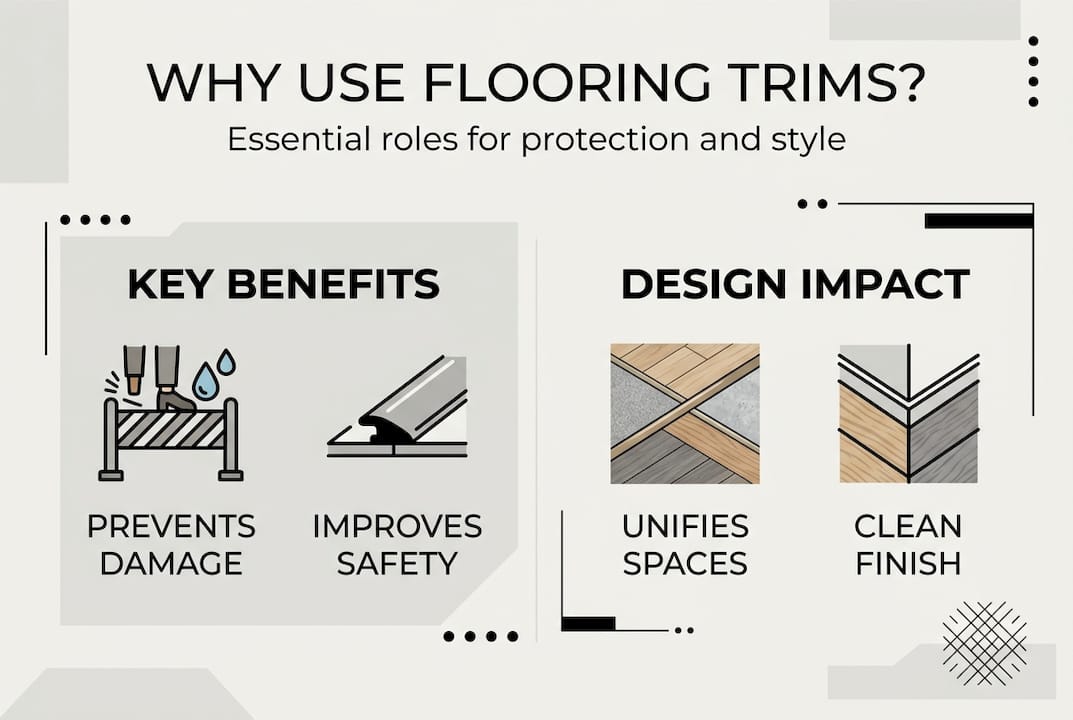
Floor edges are the most vulnerable part of any flooring installation. Every time someone walks through a doorway, the edge of the carpet or laminate takes a small impact. Over weeks and months, those impacts add up. Trims are essential for preventing wear and tear at floor edges and minimising trip hazards, particularly in high-traffic areas like hallways, kitchens, and commercial spaces.
Here is a practical order of priority when fitting trims for safety and durability:
- Fit trims in every doorway first. Doorways see the most foot traffic and are where edge damage begins fastest.
- Address open-plan transitions next. Where flooring changes in a living or dining area, a trim prevents lifting and creates a visual boundary.
- Finish with perimeter edges. Especially important in rooms with underfloor heating, where expansion and contraction can push flooring away from walls.
- Check all threshold strips for secure fixing. A loose threshold is a trip hazard waiting to happen.
- Follow the installation guide for edge trims for each specific product. Fitting methods vary and using the wrong approach weakens the trim’s grip.
For families with young children or elderly relatives, this is not just about aesthetics. A raised or loose edge can cause a serious fall. Commercial spaces face even stricter obligations, where trip hazards can result in liability claims.
Pro Tip: Before fitting any threshold strip, check the floor levels on both sides with a spirit level. Even a small height difference requires a ramp-style threshold rather than a flat bar, and getting this wrong means refitting the whole thing.
Seamless transitions: Enhancing interior decor
Alongside protection, trims bring real design advantages. Let us see how they influence your home’s look and feel in ways that go beyond simply covering a gap.
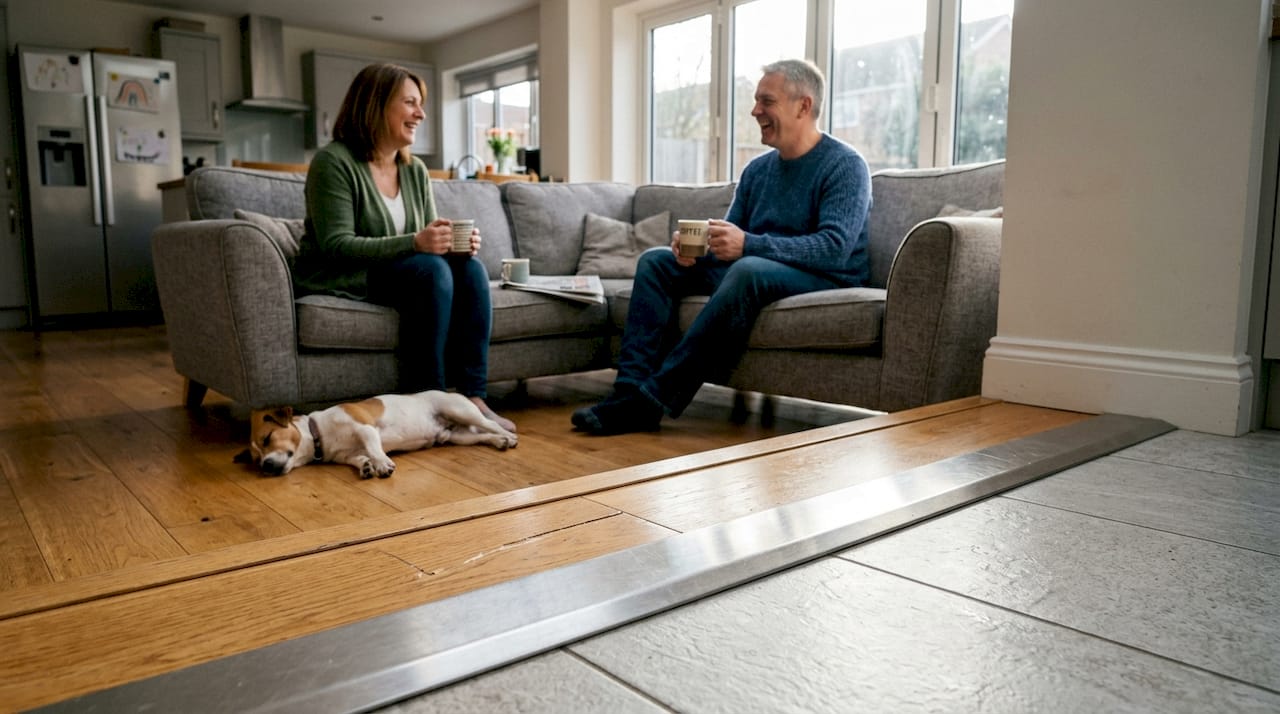
A well-chosen trim can unify different flooring materials and elevate a room’s aesthetic in a way that feels intentional rather than patched together. The finish you select sends a clear design signal. A brushed brass trim in a hallway reads as warm and traditional. A matt black bar in a kitchen-diner feels contemporary and bold.
| Trim finish | Best suited to | Interior style |
|---|---|---|
| Polished gold | Carpet to hardfloor | Classic, traditional |
| Matt black | Laminate to tile | Modern, industrial |
| Satin silver | Vinyl to hardfloor | Neutral, versatile |
| Antique bronze | Carpet to tile | Rustic, period homes |
| Brushed brass | Any transition | Contemporary, warm |
When selecting trims for your project, consider these design principles:
- Match the trim to your door furniture rather than the floor itself. Handles, hinges, and light fittings set the metallic tone of a room.
- Use consistent finishes throughout a floor level to avoid a disjointed look across multiple rooms.
- In period properties, opt for warmer tones like bronze or gold to complement original features.
- For modern interiors, cooler finishes like matt black or satin silver complement clean lines and minimal decor.
“The trim is the full stop at the end of a sentence. Get it right and the whole room reads clearly. Get it wrong and everything feels unresolved.”
For projects that must meet UK installation standards, the finish choice must also account for durability under heavy use. In commercial settings, a beautiful trim that wears poorly within a year is a false economy. Solid metal trims, hand-finished for quality, outlast cheaper alternatives by years. If you are working on a carpet to tile transition, the trim must handle the height difference cleanly while complementing both surfaces.
Installation, maintenance and common mistakes
Let us shift from design considerations to the practical side: fitting, upkeep, and avoiding the errors that compromise a trim’s effectiveness.
Proper installation is vital for achieving both durability and a flawless finish. Rushed fitting is the single biggest cause of trim failure, and it accounts for a significant proportion of callbacks on renovation projects.
Here is a straightforward installation routine that works for both domestic and commercial settings:
- Measure the doorway or transition point accurately, accounting for any angle cuts at skirting boards.
- Select the correct trim profile for the height difference between the two floor surfaces.
- Cut the trim to length using a fine-tooth saw or metal cutter for a clean edge.
- Fix the base channel or gripper to the subfloor before laying the final flooring.
- Snap or screw the trim cap into place once both floor surfaces are fully laid.
| Common mistake | Why it matters | How to avoid it |
|---|---|---|
| Skipping trims entirely | Edges fray and lift within months | Always fit trims at every transition |
| Mismatched colours | Disrupts visual flow of the room | Choose finish before ordering flooring |
| Poor subfloor fixing | Trim rocks and becomes a hazard | Use correct fixings for your subfloor type |
| Wrong profile for height | Creates a trip hazard or visible gap | Measure height difference before ordering |
For commercial trim installation steps, the process is similar but requires additional attention to load-bearing capacity and compliance with building regulations. Always check the product specification before fitting in a commercial environment.
Pro Tip: If you are working on an uneven floor, use a self-levelling compound on the subfloor before fitting any trim. A level base means the trim sits flat, looks professional, and stays secure for years. Refer to guidance on choosing the right trimming finish to ensure the profile you select suits the subfloor conditions.
For maintenance, wipe metal trims with a damp cloth monthly in high-traffic areas. Avoid abrasive cleaners that scratch the finish. Check fixings annually and re-secure any trim that has worked loose before it becomes a hazard.
Choosing the right trims for your project
Here is how to ensure your trim choice delivers both style and performance for your next UK home renovation.
The optimal trim depends upon both functional need and the desired aesthetic effect. There is no single answer that works for every project, but there is a clear framework that makes the decision straightforward.
Use this checklist before placing your order:
- Identify the transition type. Is it carpet to laminate, vinyl to tile, or a floor edge at a step? Each requires a different profile.
- Measure the height difference between the two surfaces. This determines whether you need a flat bar, a ramp profile, or a reducer strip.
- Consider the room’s traffic level. A busy hallway or commercial entrance needs a heavier-gauge trim than a bedroom doorway.
- Select a finish that matches your existing hardware. Refer to the trim terminology guide if you are unsure which profile name applies to your situation.
- Check the fixing method. Some trims screw down, others use adhesive, and some clip into a pre-fixed channel. Match the method to your subfloor.
- Order a sample before committing. Colours and finishes look different in person than on a screen, and a sample saves you from a costly mismatch.
- Plan for safe transitions throughout the project rather than adding trims as an afterthought. Fitting them at the right stage of installation is far easier and produces a better result.
For contractors managing multiple rooms or properties, standardising on a single finish across a project reduces ordering complexity and creates a more cohesive result for the client.
Upgrade your renovation with expert flooring trims
If this article has shown you anything, it is that the right trim makes a genuine difference to how a room looks, feels, and lasts. At Quality Carpet Trims, we supply solid metal door bars and trims that are hand-finished in 10 beautiful finishes, made right here in the UK to a standard that cheaper alternatives simply cannot match.

Whether you need matwell trims for an entrance area, guidance on choosing trim types for a complex renovation, or a full range of carpet-to-carpet trims for a multi-room project, we have the product and the expertise to help you get it right first time. Free samples, fast UK delivery, and expert advice are all part of the service. Browse our range today and give your renovation the finish it deserves.
Frequently asked questions
Can flooring trims improve home safety?
Yes, trims reduce trip hazards and keep floor edges secure, particularly in doorways and open-plan transitions. Trims help minimise accidents at transitions where two different floor surfaces meet.
How do I select the right trim colour for my decor?
Choose a finish that complements your existing door furniture and hardware rather than trying to match the floor itself. Trim colours set the tone for seamless interiors and a consistent metallic finish across a room creates a far more polished result.
Are trims necessary for laminate flooring?
Absolutely. Laminate edges are particularly vulnerable to chipping and lifting without protection. Trims prevent laminate edge damage and improve finish longevity, especially in doorways where foot traffic is heaviest.
What is the difference between edge trims and threshold bars?
Edge trims finish the perimeter of a floor where it meets a wall or step, while threshold bars bridge the gap between two different flooring types at a doorway. Different trims serve distinct purposes and using the correct one for each situation is essential for both safety and appearance.
How often should trims be checked or replaced?
Inspect trims annually and replace them promptly if they are damaged or have worked loose. Regular maintenance extends trim life and prevents a minor issue from becoming a safety hazard or a costly repair.
Recommended
- Flooring trim types explained: choosing the right finish
- Flooring Trim: Ensuring Seamless, Safe Transitions
- Flooring Edge Trims: The Key to a Seamless Finish
- Types of Flooring Trims Explained: Seamless Finishes
- 7 Innovative Interior Railing Ideas for Modern Spaces – Inoxify